24/7 Support : info@razorse.com | WhatsApp : +91-7011221090

What is NoOps, and How Can It Be Achieved in Mobile App Development?

The mobile app development industry has seen tremendous growth in recent years, largely driven by the evolving demands for faster, scalable, and more efficient software solutions. Among the many approaches to streamline development processes, NoOps (No Operations) has emerged as a key paradigm. As organizations strive to increase agility and reduce overhead, NoOps promises to automate operations entirely, making manual intervention in infrastructure management nearly obsolete. In this write-up, we’ll explore what NoOps is and how it can be achieved specifically in mobile app development.

What is NoOps?

NoOps refers to a concept in cloud computing where the need for a dedicated operations team to manage infrastructure is minimized or eliminated through automation. By using advanced tools and technologies such as artificial intelligence, machine learning, and cloud services, organizations can automate repetitive tasks, optimize workloads, and ensure that infrastructure runs seamlessly without human intervention.

NoOps in the Context of Mobile App Development

In mobile app development, where agility and speed-to-market are critical, NoOps can prove to be transformative. The key benefits of applying NoOps to mobile app development include:

  1. Faster Time-to-Market: By automating the infrastructure setup and deployment processes, developers can focus purely on coding and building new features. This leads to faster app iterations, reduced development cycles, and ultimately quicker launches.
  2. Improved Scalability: NoOps platforms allow apps to scale automatically based on demand, whether it’s adjusting to user surges after a new release or handling traffic spikes. As the infrastructure is automatically optimized, developers don’t have to worry about server capacity or database performance.
  3. Increased Reliability: With NoOps, most of the routine operations such as server maintenance, patching, and backups are automated. This reduces the likelihood of human error and ensures a more reliable and stable environment for mobile app performance.
  4. Cost Efficiency: NoOps not only saves time but also helps in reducing costs. By eliminating the need for a dedicated operations team and manual interventions, companies can significantly lower operational expenses. Automation optimizes the use of cloud resources, so organizations only pay for what they need.
  5. Continuous Deployment: Automated pipelines enable seamless app deployment without manual oversight. With the continuous integration of code changes, mobile app updates and features can be pushed directly to production, speeding up delivery and reducing time gaps between releases.

Achieving NoOps in Mobile App Development

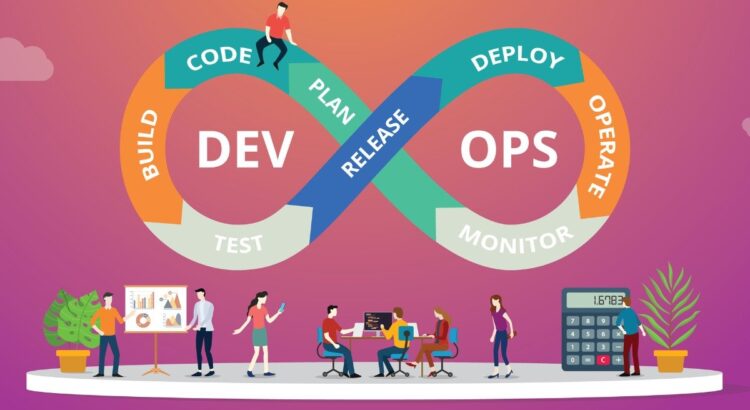
Transitioning to a NoOps environment for mobile app development requires the use of modern tools and best practices that facilitate full automation. Here’s how organizations can achieve NoOps:

1. Adopt Serverless Architecture

One of the foundations of NoOps is serverless architecture, which allows developers to build and run applications without managing the underlying infrastructure. In mobile app development, serverless platforms like AWS Lambda, Google Cloud Functions, and Azure Functions can automatically scale up or down depending on the app’s workload.

These serverless environments handle all operational responsibilities, including monitoring, scaling, and security, freeing developers to focus solely on writing code. Serverless computing enables true agility by abstracting away the need for operations teams to manage servers and workloads manually.

2. Use Infrastructure as Code (IaC)

NoOps relies heavily on Infrastructure as Code (IaC), a practice that automates infrastructure provisioning and management through code. Tools like Terraform, AWS CloudFormation, and Azure Resource Manager allow infrastructure to be defined and versioned just like application code, creating repeatable environments across staging, development, and production environments.

In mobile app development, IaC can streamline how environments are provisioned for app testing and deployment. This automation ensures consistency across different environments, helping developers focus on coding and innovation instead of infrastructure management.

3. Embrace Automation Tools

Automation tools are essential in achieving NoOps. Platforms like Jenkins, CircleCI, and GitLab CI/CD facilitate continuous integration and delivery (CI/CD) pipelines. These pipelines automate the entire app deployment process, ensuring that apps are tested, built, and deployed automatically as soon as new code is committed.

By utilizing automation tools, mobile app development teams can ensure faster iterations, continuous testing, and deployment without needing an operations team to intervene manually.

4. Monitoring and AI-Driven Insights

NoOps also incorporates AI and machine learning algorithms to automatically monitor and maintain the infrastructure. Tools like Datadog, New Relic, and AWS CloudWatch provide AI-driven insights to detect and resolve issues before they affect app performance.

In mobile apps, where user experience is critical, automated monitoring ensures that any performance bottlenecks, bugs, or downtime can be instantly addressed through pre-defined rules and automated resolutions.

5. Leverage Containerization

Another key practice in NoOps is the use of containerization technologies like Docker and Kubernetes. Containers enable developers to package mobile apps and their dependencies into standardized units, making it easy to deploy across different environments. Kubernetes can automate the deployment, scaling, and management of containerized apps, removing the need for manual operations management.

Challenges in Implementing NoOps

While the benefits of NoOps are numerous, transitioning to a NoOps environment isn’t without challenges. Organizations may face initial hurdles in terms of restructuring teams, adopting new tools, and redefining processes to align with NoOps principles. However, once these challenges are overcome, the increased efficiency and agility it brings can revolutionize mobile app development workflows.

Razorse Software and the NoOps Approach

At Razorse Software, we understand the need for businesses to stay competitive by adopting cutting-edge methodologies like NoOps. Our expertise in mobile app development, backed by advanced automation tools and practices, ensures that our clients benefit from fast, reliable, and scalable mobile applications. With a focus on continuous delivery and automated processes, Razorse Software helps companies achieve seamless app performance, allowing them to focus on innovation without worrying about the complexities of infrastructure management.

#NoOps #MobileAppDevelopment #Automation #ServerlessArchitecture #RazorseSoftware #CI/CD #CloudComputing #DevOps #InfrastructureAsCode #AppDevelopment

What is Mobile User Acquisition Marketing, and how does it differ from Direct-to-Consumer (DTC) marketing?

In the ever-evolving world of digital marketing, two powerful strategies stand out: Mobile User Acquisition Marketing and Direct-to-Consumer (DTC) Marketing. While both focus on driving growth and reaching consumers, their methods, objectives, and tactics can vary significantly. Understanding the key differences between these two strategies can help businesses optimize their marketing efforts and reach their desired audience more effectively.

What is Mobile User Acquisition Marketing?

Mobile User Acquisition Marketing refers to strategies aimed at acquiring new users for mobile apps. It focuses primarily on increasing app installs and engaging users on mobile platforms. With the increasing shift towards mobile devices, this type of marketing has become crucial for businesses that want to tap into the rapidly growing mobile app ecosystem.

Mobile user acquisition marketing involves several tactics, including:

  1. App Store Optimization (ASO): Similar to SEO for websites, ASO aims to improve the visibility of an app in app stores (like Google Play and Apple’s App Store). This helps increase organic downloads.
  2. Paid User Acquisition: This involves running paid campaigns on platforms like Facebook, Google, Instagram, TikTok, and other ad networks to drive app installs. Advertisers typically pay per install (CPI model).
  3. Social Media Marketing: Leveraging platforms like Instagram, Facebook, and Twitter, mobile user acquisition marketers run campaigns targeting specific demographics and interests, encouraging them to install the app.
  4. Influencer Marketing: Collaborating with influencers in relevant niches helps create buzz and trust around an app, driving more users to download and use it.
  5. Retention and Engagement Campaigns: Once users install the app, retaining them is equally important. Push notifications, email campaigns, and in-app incentives are used to keep users engaged.

What is Direct-to-Consumer (DTC) Marketing?

Direct-to-Consumer (DTC) Marketing refers to businesses selling their products or services directly to consumers, bypassing traditional intermediaries like wholesalers, distributors, or retailers. This model gives brands more control over their brand messaging, customer relationships, and pricing.

In DTC marketing, companies use digital platforms to promote their products, engage with customers, and generate sales. Some of the most common strategies include:

  1. Content Marketing: Creating engaging and informative content that appeals directly to the target audience, enhancing brand awareness and driving traffic to the website.
  2. Email Marketing: A powerful tool for nurturing customer relationships, sending product updates, and offering exclusive deals.
  3. Social Media Marketing: DTC brands heavily rely on social platforms to build their brand and engage with consumers through targeted ads, influencer collaborations, and user-generated content.
  4. E-commerce: The direct sales channel is primarily via the brand’s website or a dedicated app, allowing for direct interaction with the consumer without intermediaries.
  5. Customer Relationship Management (CRM): Through the use of CRM tools, brands can keep track of their customers, monitor buying habits, and personalize the customer experience, leading to higher conversion rates and long-term customer loyalty.

Key Differences Between Mobile User Acquisition Marketing and DTC Marketing

Though both Mobile User Acquisition Marketing and DTC Marketing aim to grow the customer base, their approaches and objectives are distinct.

1. Platform and Medium

  • Mobile User Acquisition focuses solely on acquiring users for a mobile app, whereas DTC Marketing targets consumers directly through various online channels, including websites, apps, and social media platforms.
  • In Mobile User Acquisition, campaigns are heavily centered around increasing app installs and encouraging engagement within the app. On the other hand, DTC campaigns may target website visits, online purchases, or lead generation.

2. Target Audience

  • The target audience for Mobile User Acquisition Marketing is primarily mobile users, especially those who prefer mobile apps for shopping, entertainment, or productivity.
  • DTC Marketing targets the broader consumer base. The campaigns are focused on driving brand awareness, increasing conversions, and fostering long-term relationships with customers across digital platforms, be it mobile, web, or offline.

3. Metrics of Success

  • Mobile User Acquisition Marketing measures success based on the number of installs, retention rate, cost-per-install (CPI), and lifetime value (LTV) of users.
  • DTC Marketing, on the other hand, focuses on metrics such as customer acquisition cost (CAC), return on ad spend (ROAS), customer lifetime value (CLV), and conversion rates from the website or app.

4. Engagement Tactics

  • Mobile User Acquisition Marketing heavily leverages in-app notifications, in-app rewards, and retargeting ads to ensure users continue to engage with the app after the initial install.
  • In DTC Marketing, engagement tactics involve personalized email campaigns, product recommendations, exclusive discounts, and loyalty programs to encourage repeat purchases and customer loyalty.

5. End Goal

  • For Mobile User Acquisition Marketing, the goal is primarily to acquire as many high-quality users for the app as possible and to keep them engaged, leading to higher retention and usage rates.
  • DTC Marketing is focused on driving sales directly from consumers by building a brand, creating trust, and ensuring a seamless purchasing experience. It’s about fostering long-term relationships and brand loyalty.

Why Razorse Software for Mobile User Acquisition & DTC Marketing?

At Razorse Software, we specialize in designing and implementing cutting-edge marketing strategies for businesses looking to expand their mobile app user base or sell directly to consumers. With over 14 years of expertise in the industry, we offer a complete suite of services to help you navigate the challenges of both Mobile User Acquisition Marketing and DTC Marketing.

Our services include:

  • Comprehensive mobile marketing strategies tailored to your app
  • Advanced App Store Optimization (ASO)
  • Data-driven DTC marketing strategies that focus on customer acquisition and retention
  • Full-cycle campaign management for both mobile and e-commerce platforms

Reach out to us today to discover how Razorse Software can help you grow your mobile app user base and boost your direct-to-consumer marketing efforts.

#MobileMarketing #UserAcquisition #DTCMarketing #MobileAppGrowth #EcommerceMarketing #MarketingStrategy #RazorseSoftware #CustomerEngagement #DigitalTransformation #AppStoreOptimization #DirectToConsumer #AI #BusinessGrowth

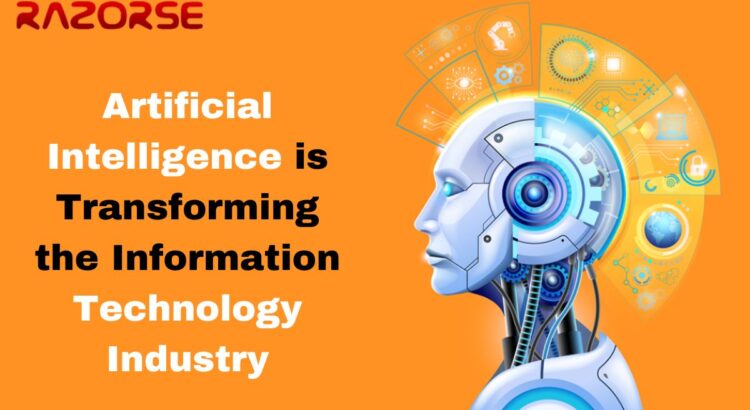
Artificial Intelligence is Transforming the Information Technology Industry

Artificial Intelligence (AI) is revolutionizing various sectors, and the Information Technology (IT) industry is at the forefront of this transformation. AI’s capabilities are enhancing IT operations, automating processes, and providing deeper insights through data analysis. This blog explores how AI is transforming the IT industry, focusing on key areas such as IT operations, cybersecurity, software development, and data management.

AI in IT Operations

IT operations have traditionally relied on manual processes and human intervention. However, AI is changing this landscape by introducing automation and intelligence into routine tasks. AI-powered tools and systems can monitor network traffic, predict potential issues, and even resolve problems without human intervention. This not only increases efficiency but also reduces downtime and operational costs.

Enhancing Cybersecurity

Cybersecurity is a critical concern for the IT industry. With the increasing sophistication of cyber threats, traditional security measures are often inadequate. AI is stepping in to bolster cybersecurity by offering advanced threat detection and response capabilities.

AI algorithms can analyse network traffic in real-time, identifying anomalies that may indicate a cyber-attack. Machine learning models are trained on historical data to recognize patterns associated with various types of cyber threats, such as malware, phishing, and ransomware. This enables AI systems to detect and respond to threats faster than human analysts.

Revolutionizing Software Development

Software development is another area where AI is making a profound impact. Traditional software development involves extensive coding, testing, and debugging. AI is streamlining these processes by offering tools that assist developers in writing code, identifying bugs, and optimizing performance.

AI-powered code generation tools, such as GitHub Copilot, use natural language processing (NLP) to understand developers’ instructions and generate code snippets. This can significantly speed up the development process and reduce the likelihood of errors.

In addition to code generation, AI is enhancing software testing. AI-driven testing tools can automatically generate test cases, execute them, and analyse the results. This reduces the time and effort required for testing, allowing developers to focus on more complex tasks. AI can also identify performance bottlenecks and suggest optimizations, ensuring that software runs efficiently.

Improving Data Management

Data is the lifeblood of the IT industry. However, managing vast amounts of data is a challenging task. AI is transforming data management by offering advanced data analytics and automation capabilities.

AI-powered data analytics tools can process and analyse large datasets, extracting valuable insights that would be difficult to obtain through manual analysis. These insights can drive informed decision-making and strategic planning. For instance, AI can analyse customer data to identify trends and preferences, enabling businesses to tailor their products and services to meet customer needs.

AI is also automating data management tasks such as data cleansing, integration, and migration. Machine learning algorithms can identify and correct errors in datasets, ensuring data accuracy and consistency. AI can also streamline data integration processes by automatically mapping and transforming data from different sources.

AI in IT Service Management

IT service management (ITSM) is another area where AI is making significant contributions. AI-powered chatbots and virtual assistants are revolutionizing IT support by providing instant responses to user queries and resolving common issues.

AI chatbots use NLP to understand and respond to user queries in natural language. They can handle a wide range of tasks, from password resets to troubleshooting connectivity issues. This reduces the workload on IT support teams and ensures that users receive timely assistance.

Furthermore, AI is enhancing ITSM by providing predictive analytics. AI algorithms can analyse historical incident data to identify patterns and predict future incidents. This enables IT teams to take proactive measures to prevent incidents, improving service reliability and user satisfaction.

Challenges and Future Directions

While AI offers numerous benefits to the IT industry, it also presents challenges. One major challenge is the need for skilled professionals who can develop, implement, and maintain AI systems. The rapid pace of AI innovation also means that IT professionals must continually update their skills to keep up with new developments.

Another challenge is ensuring the ethical use of AI. AI systems can inadvertently perpetuate biases present in training data, leading to unfair outcomes. Ensuring transparency and accountability in AI decision-making processes is essential to address these concerns.

Looking to the future, AI is expected to continue transforming the IT industry. Advances in AI technologies such as deep learning, reinforcement learning, and quantum computing will drive further innovation. The integration of AI with other emerging technologies, such as the Internet of Things (IoT) and blockchain, will unlock new possibilities and applications.

Final Thoughts

Artificial Intelligence is undoubtedly transforming the Information Technology industry, bringing about significant improvements in efficiency, security, and innovation. From automating IT operations to enhancing cybersecurity, revolutionizing software development, and improving data management, AI is reshaping the IT landscape. As AI continues to evolve, its impact on the IT industry will only grow, driving new opportunities and challenges. Embracing AI and addressing its challenges will be key to staying competitive and leveraging its full potential.

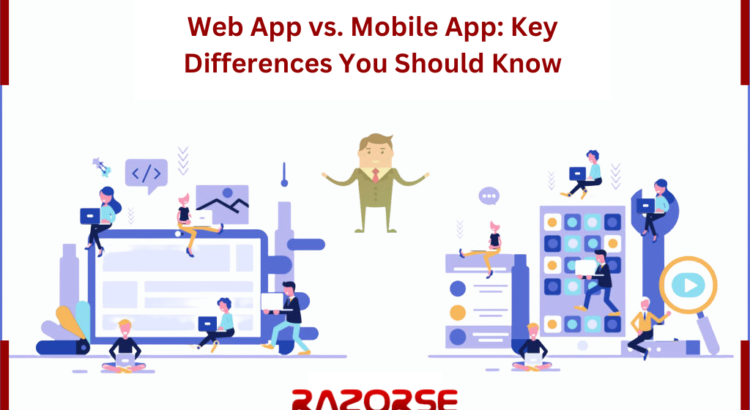
Web App vs. Mobile App: Key Differences You Should Know

In today’s digital era, businesses and developers often face a crucial decision: whether to create a web application (web app) or a mobile application (mobile app). While both serve the fundamental purpose of enabling user interaction and functionality, they cater to different needs and have distinct characteristics. Understanding the key differences between web apps and mobile apps is essential to make an informed decision. Here, we explore eight critical differences you should know:

1. Platform Dependency

Web apps are designed to run on web browsers, making them platform-independent. They can be accessed from any device with a web browser, whether it’s a desktop, laptop, tablet, or smartphone. On the other hand, mobile apps are platform-dependent, designed specifically for mobile operating systems like iOS or Android. This means a mobile app developed for iOS won’t run on Android devices and vice versa.

2. Installation and Accessibility

A significant difference between web apps and mobile apps is the installation process. Web apps do not require installation; users can access them via a URL on any web browser. This makes them instantly accessible without consuming device storage. Conversely, mobile apps need to be downloaded and installed from app stores like Google Play or the Apple App Store. This process can be a barrier for some users who prefer not to use up their device’s storage.

3. User Experience and Performance

Mobile apps generally provide a superior user experience and performance compared to web apps. They are built using native technologies tailored to specific platforms, ensuring optimized performance, faster load times, and smoother interactions. Mobile apps can leverage device-specific features like the camera, GPS, and offline functionality more effectively. Web apps, while accessible, often struggle to match the fluidity and responsiveness of mobile apps due to their dependency on browser capabilities and internet connectivity.

4. Development Complexity and Cost

The development process for web apps is typically more straightforward and cost-effective. Developers can use a single codebase to create a web app that runs across multiple platforms. In contrast, mobile apps require separate development efforts for each platform, often necessitating different teams and skill sets for iOS and Android. This can significantly increase the time, effort, and cost involved in development and maintenance.

5. Updates and Maintenance

Updating a web app is relatively simple; developers can deploy updates directly to the server, and users will automatically have access to the latest version the next time they access the app. Mobile apps, however, require users to download and install updates from app stores. This process can lead to delays in users receiving updates and can be more cumbersome for developers who need to ensure compatibility with various devices and OS versions.

6. Distribution and Reach

Web apps have a broader reach since they are accessible from any device with a web browser. This makes it easier to target a global audience without the restrictions of app store approvals and compatibility issues. Mobile apps, while providing better engagement and user experience, are limited to users who have compatible devices and are willing to download the app. Additionally, mobile apps are subject to app store policies and guidelines, which can sometimes be restrictive.

7. Security

Security is a critical consideration in the app development process. Web apps are inherently more vulnerable to security threats since they are accessed via web browsers. They can be susceptible to various web-based attacks, such as cross-site scripting (XSS) and cross-site request forgery (CSRF). Mobile apps, being platform-specific, can leverage built-in security features of the operating system, making them generally more secure. However, this does not eliminate security risks entirely, and developers must still adhere to best practices for mobile app security.

8. Monetization Opportunities

The monetization strategies for web apps and mobile apps differ significantly. Web apps primarily rely on subscription models, advertising, and freemium models to generate revenue. Mobile apps have additional monetization options, such as in-app purchases and integration with app store billing systems, which can be more seamless and convenient for users. App stores also provide a marketplace where mobile apps can gain visibility and reach potential users, which can be advantageous for monetization efforts.

Making the Right Choice

Choosing between a web app and a mobile app depends on various factors, including the target audience, budget, and specific business needs. Here are a few considerations to help make the decision:

  • Target Audience: If your audience primarily uses mobile devices and expects a high-performance, feature-rich experience, a mobile app may be the better choice. For a broader reach and accessibility across different devices, a web app might be more suitable.
  • Budget and Resources: Web apps are generally more cost-effective to develop and maintain, making them a viable option for startups or businesses with limited budgets. Mobile apps require a larger investment but can offer better engagement and monetization opportunities.
  • User Experience: Consider the level of user experience you want to provide. Mobile apps offer a more polished, responsive, and feature-rich experience, while web apps provide easier accessibility and compatibility across devices.
  • Development Timeline: If time-to-market is a critical factor, web apps can be developed and deployed faster. Mobile apps, due to their complexity and platform-specific requirements, typically take longer to develop.

To wrap up, both web apps and mobile apps have their unique advantages and challenges. By understanding the key differences and evaluating your specific needs and goals, you can make an informed decision that best aligns with your business objectives. Whether you choose a web app or a mobile app, focusing on delivering value and an exceptional user experience should always be the priority.

Integrating AI and Machine Learning in Mobile Apps

Artificial Intelligence (AI) and Machine Learning (ML) have transitioned from theoretical concepts to transformative technologies that are revolutionizing various industries. Among these, mobile app development stands out as a domain experiencing significant disruption and enhancement due to the integration of AI and ML. This blog explores how integrating AI and ML in mobile apps is reshaping user experiences, driving innovation, and setting new standards for efficiency and functionality.

Understanding AI and ML

AI refers to the simulation of human intelligence in machines, enabling them to perform tasks that typically require human intelligence, such as visual perception, speech recognition, decision-making, and language translation. ML, a subset of AI, involves training algorithms on large datasets to enable them to make predictions or decisions without being explicitly programmed for each task.

The convergence of AI and ML in mobile apps is creating opportunities to deliver personalized, intelligent, and responsive user experiences. Here are the specific ways these technologies are being integrated into mobile apps and the benefits they bring.

Enhancing User Experience

  • Personalization: AI and ML enable apps to learn from user behaviour and preferences, allowing for highly personalized experiences. For instance, streaming services like Netflix and Spotify use ML algorithms to analyse user data and recommend content tailored to individual tastes. Similarly, e-commerce apps leverage AI to provide personalized shopping experiences, suggesting products based on browsing history and purchase patterns.
  • Natural Language Processing (NLP): NLP, a branch of AI, empowers mobile apps to understand and interpret human language. Voice assistants like Siri, Google Assistant, and Alexa utilize NLP to comprehend and respond to user commands, making interactions more natural and intuitive. Chatbots integrated into customer service apps use NLP to handle customer queries efficiently, providing instant support and enhancing user satisfaction.
  • Image and Voice Recognition: AI-driven image and voice recognition technologies are revolutionizing how users interact with mobile apps. Apps like Google Photos use image recognition to categorize and search photos based on content, while voice recognition allows users to perform tasks hands-free, enhancing accessibility and convenience.

Driving Innovation and Efficiency

  • Predictive Analytics: ML algorithms excel at analysing historical data to make predictions about future outcomes. In mobile apps, predictive analytics can forecast user behaviour, enabling proactive engagement strategies. For example, fitness apps can predict when users are likely to exercise and send timely reminders, while finance apps can anticipate spending patterns and provide budgeting advice.
  • Automated Processes: AI and ML automate repetitive tasks, improving efficiency and freeing up resources for more strategic activities. In mobile banking apps, AI-powered algorithms can automate fraud detection by analysing transaction patterns and flagging suspicious activities in real-time. Similarly, in healthcare apps, ML can automate the analysis of medical records, aiding in faster diagnosis and treatment recommendations.
  • Enhanced Security: Security is paramount in mobile app development, and AI plays a crucial role in fortifying it. ML algorithms can detect and respond to security threats by analysing patterns and identifying anomalies. Biometric authentication methods, such as facial recognition and fingerprint scanning, are enhanced by AI, providing robust security measures to protect user data.

Overcoming Challenges

While the integration of AI and ML in mobile apps offers numerous benefits, it also presents certain challenges that developers must address:

  • Data Privacy and Security: AI and ML rely on vast amounts of data to function effectively. Ensuring the privacy and security of this data is crucial. Developers must implement stringent data protection measures and comply with regulations like GDPR to safeguard user information.
  • Model Training and Maintenance: ML models require continuous training and updates to remain accurate and relevant. This necessitates ongoing data collection and processing, which can be resource-intensive. Developers need to establish efficient workflows for model training and maintenance to ensure optimal performance.
  • User Trust and Transparency: Users need to trust that AI and ML technologies are being used ethically and transparently. Clear communication about how data is collected, processed, and utilized is essential to build and maintain user trust. Providing users with control over their data and offering opt-in/opt-out options can further enhance transparency.

Future Trends and Opportunities

The integration of AI and ML in mobile apps is an evolving landscape, with several emerging trends and opportunities on the horizon:

  • Edge AI: Edge AI involves processing data on the device itself, rather than relying on cloud-based servers. This approach reduces latency, enhances data privacy, and improves real-time decision-making capabilities. With advancements in hardware, edge AI is becoming more feasible, enabling smarter and faster mobile apps.
  • Explainable AI (XAI): As AI-driven decisions become more complex, the need for explainability is growing. XAI aims to make AI processes and outcomes understandable to humans. Integrating XAI into mobile apps can enhance user trust and provide insights into how AI-driven recommendations or actions are derived.
  • Cross-Industry Applications: AI and ML are not confined to specific industries; their applications are expanding across various sectors. From healthcare and finance to education and entertainment, mobile apps in diverse domains are leveraging AI and ML to deliver innovative solutions and improve user experiences.

How Augmented Reality is Transforming Retail and E-Commerce

Augmented Reality (AR) has been making significant strides in various industries, and retail and e-commerce are no exceptions. As the digital and physical worlds continue to merge, AR offers a unique blend of interactivity and immersion that can significantly enhance the shopping experience. This article explores the transformative impact of AR on retail and e-commerce, highlighting its benefits, applications, and future prospects.

The Rise of Augmented Reality in Retail

AR technology overlays digital information onto the real world, providing an interactive and engaging experience for users. In retail, this means that customers can visualize products in their real environment before making a purchase. The rise of AR in retail is driven by several factors:

  • Enhanced Customer Experience: AR offers a more immersive shopping experience, allowing customers to see how products will look or fit in their space.
  • Increased Engagement: Interactive AR applications can capture and retain customer attention more effectively than traditional media.
  • Technological Advancements: Improvements in mobile technology and increased smartphone penetration have made AR more accessible to consumers.
  • Pandemic Impact: The COVID-19 pandemic accelerated the adoption of AR as retailers sought innovative ways to engage customers remotely.

Key Applications of AR in Retail and E-Commerce

  1. Virtual Try-Ons

One of the most popular applications of AR in retail is virtual try-ons. This technology allows customers to see how clothes, accessories, or makeup will look on them without physically trying them on.

  • Product Visualization

AR enables customers to visualize products in their real environment. This is particularly useful for furniture and home decor retailers. IKEA’s AR app, IKEA Place, allows customers to place virtual furniture in their rooms to see how it fits and looks. This not only enhances the shopping experience but also reduces the likelihood of returns.

  • In-Store Navigation

For physical retail stores, AR can enhance the in-store experience by providing navigation assistance. Customers can use AR apps to find specific products within the store, get information on promotions, or even access virtual store assistants. This can improve the efficiency of the shopping experience and increase customer satisfaction.

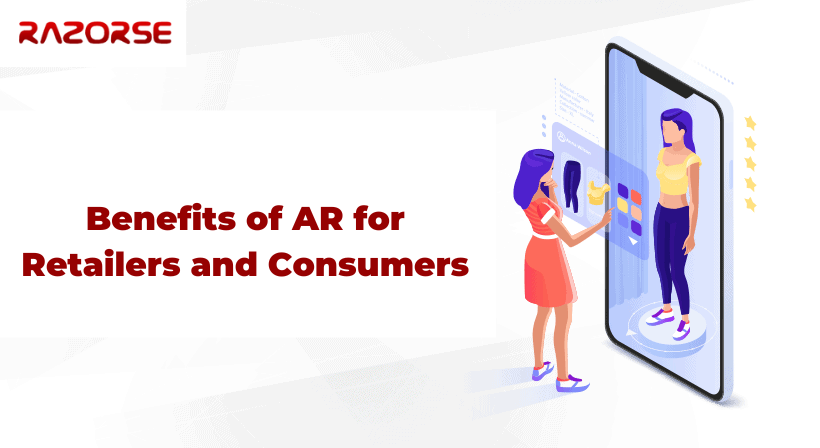
Benefits of AR for Retailers and Consumers

  1. Enhanced Customer Engagement

AR offers a highly interactive and engaging experience that can capture customer attention and increase time spent on a retailer’s app or website. This can lead to higher conversion rates and increased sales.

  • Reduced Returns

By allowing customers to visualize products in their environment or try them on virtually, AR can reduce the likelihood of returns. Customers can make more informed purchase decisions, leading to higher satisfaction with their purchases.

  • Increased Brand Loyalty

Innovative AR experiences can differentiate a brand from its competitors and create a memorable shopping experience. This can increase customer loyalty and encourage repeat business.

  • Data Insights

AR applications can provide retailers with valuable data insights into customer preferences and behaviour. This data can be used to personalize the shopping experience, improve product recommendations, and inform marketing strategies.

Challenges and Considerations

While AR offers numerous benefits, there are also challenges and considerations for retailers to address:

  • Technology Integration

Integrating AR technology into existing retail systems can be complex and costly. Retailers need to ensure that their infrastructure can support AR applications and provide a seamless experience for customers.

  • User Adoption

While AR is becoming more popular, there is still a learning curve for some consumers. Retailers need to invest in educating their customers on how to use AR features effectively.

  • Content Creation

Creating high-quality AR content can be resource-intensive. Retailers need to invest in the development of 3D models, animations, and interactive features to provide a compelling AR experience.

  • Privacy Concerns

AR applications often require access to a user’s camera and location data. Retailers need to ensure that they handle this data responsibly and address any privacy concerns that customers may have.

The Future of AR in Retail and E-Commerce

The future of AR in retail and e-commerce looks promising. As technology continues to advance, we can expect AR experiences to become even more immersive and realistic. Here are some potential developments:

  • Widespread Adoption of AR Glasses

AR glasses, such as Apple’s rumoured AR headset, could revolutionize the shopping experience by providing hands-free, immersive AR experiences. This could make virtual shopping more seamless and convenient.

  • Integration with AI

The integration of AR with artificial intelligence (AI) could enhance personalization and product recommendations. AI-powered AR applications could analyse customer preferences and behaviour to provide tailored shopping experiences.

  • Expansion of Virtual Stores

Virtual stores could become more common, offering customers a fully immersive shopping experience from the comfort of their homes. This could open up new opportunities for retailers to reach global audiences.

Conclusion

Augmented Reality is transforming retail and e-commerce by providing interactive, immersive, and engaging shopping experiences. From virtual try-ons and product visualization to interactive product information and virtual stores, AR offers numerous applications that benefit both retailers and consumers. While there are challenges to overcome, the future of AR in retail looks bright, with potential developments such as AR glasses, AI integration, and expanded virtual stores on the horizon. As technology continues to evolve, AR is set to play an increasingly important role in shaping the future of retail and e-commerce.