24/7 Support : info@razorse.com | WhatsApp : +91-7011221090

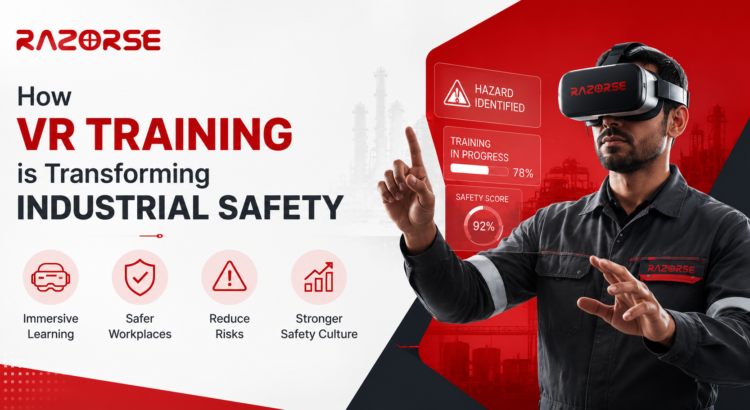
Industrial worker using VR headset for immersive safety training in a manufacturing plant by Razorse

How VR Training is Transforming Industrial Safety

Introduction

Industrial safety training is one of the most important responsibilities for manufacturing organizations. From fire hazards and emergency response procedures to machine handling and hazardous environment awareness, effective training directly impacts employee safety and operational continuity.

However, traditional training methods often struggle to prepare employees for real-world industrial situations. Classroom sessions, manuals, and instructional videos may provide theoretical knowledge, but they rarely create realistic learning experiences.

This is why Virtual Reality (VR) training

is rapidly transforming industrial safety across manufacturing industries.

The Limitations of Traditional Safety Training

Conventional safety training programs face several challenges. Employees often experience low engagement during classroom-based learning sessions, resulting in poor knowledge retention. Since practical exposure is limited, workers may struggle to respond effectively during actual emergencies.

Another major challenge is the inability to simulate dangerous situations safely. Manufacturing organizations cannot repeatedly expose employees to live fire hazards, chemical leaks, or high-risk machinery environments during training sessions.

As a result, employees may understand safety procedures theoretically but lack confidence and preparedness during real incidents.

What is VR-Based Industrial Training?

VR training uses immersive virtual environments to simulate realistic industrial scenarios. Employees wear VR headsets and interact with digitally created workplace situations that closely replicate actual factory environments.

Through VR simulations, employees can practice fire safety procedures, emergency evacuation drills, machine handling operations, hazard identification, safety compliance training, and high-risk operational scenarios.

This allows organizations to provide hands-on learning experiences without exposing employees to actual risks.

Why VR Training is Gaining Popularity

Manufacturing organizations are increasingly adopting VR because immersive learning significantly improves engagement and retention. Employees actively participate in training sessions instead of passively consuming information.

Experiential learning methods help employees remember procedures more effectively compared to traditional presentations or manuals. VR training also allows repeated simulations, enabling workers to practice scenarios multiple times until they gain confidence.

This creates a safer and more prepared workforce.

Key Benefits of VR Training in Manufacturing

One of the biggest advantages of VR training is improved safety awareness. Employees experience realistic industrial situations that help them understand workplace risks more effectively.

VR also improves learning retention because interactive training environments create stronger memory recall compared to traditional methods.

Another important benefit is risk-free practical exposure. Employees can safely practice dangerous procedures without being exposed to actual hazards.

VR training additionally provides standardized learning experiences across the organization. Every employee receives the same quality of training, ensuring consistency and compliance.

Manufacturing organizations also benefit from long-term cost savings by reducing physical training setup costs, minimizing operational disruptions, and lowering incident-related expenses.

VR Training Use Cases in Manufacturing

VR technology is now being used across multiple industrial safety applications.

Fire safety training is one of the most common use cases. Employees can practice emergency evacuation procedures and fire response protocols in highly realistic environments.

VR is also widely used for machine operation training, allowing workers to understand equipment handling procedures before operating actual machinery.

Hazardous environment simulations help employees prepare for chemical leaks, confined space operations, and emergency shutdown procedures safely.

Organizations are also using VR to improve compliance readiness by maintaining digital training records and performance tracking systems.

VR and Industry 4.0

Industry 4.0 is not only about automation and connected machines. It also focuses on building digitally empowered workforces capable of operating advanced industrial systems efficiently and safely.

VR training supports Industry 4.0 initiatives by accelerating workforce upskilling, improving operational safety, enhancing workforce readiness, reducing human errors, and supporting digital transformation strategies.

As factories become smarter, workforce training methods must evolve accordingly.

Real-World Industrial Scenario

Imagine a manufacturing plant conducting emergency fire evacuation training using traditional methods. Organizing live drills may disrupt operations while still failing to replicate real emergency pressure effectively.

With VR training, employees can experience highly realistic emergency scenarios inside a controlled virtual environment. Supervisors can evaluate employee responses, monitor decision-making, and repeat simulations whenever required.

This improves preparedness while minimizing operational disruption.

The Future of Industrial Training

The future of manufacturing training will increasingly rely on immersive technologies such as VR, AI, and simulation-based learning.

Organizations adopting VR training early can achieve safer workplaces, faster onboarding, better compliance management, improved workforce confidence, and reduced operational incidents.

VR is rapidly becoming a key component of smart manufacturing transformation.

Conclusion

Industrial safety training is evolving beyond classrooms and presentations. VR-based learning offers a smarter, safer, and more effective approach to workforce training in modern manufacturing environments.

As Industry 4.0 adoption accelerates, organizations investing in immersive learning technologies will build stronger, safer, and future-ready workforces.

Looking to implement immersive VR-based industrial training solutions for your workforce? Connect with Razorse Software to explore VR safety training designed specifically for modern manufacturing environments.

The Influence of Technology on the Global Real Estate Sector

The Influence of Technology on the Global Real Estate Sector

Technology has become a cornerstone of the real estate industry in Dubai, reshaping the way properties are managed, marketed, and sold. With the total real estate transactions in 2022 reaching a staggering AED 528 billion, it’s clear that technology is driving significant changes in the market dynamics. Digitized property management systems have become the norm, empowering real estate companies to streamline operations and manage vast portfolios of properties with ease, even on an international scale. This digital transformation has not only centralized property information but has also enhanced efficiency and transparency across the board.

Moreover, technology has revolutionized marketing strategies in the international real estate market in Dubai. Digital tools such as social media advertising and search engine optimization have opened up avenues for real estate companies to reach potential buyers worldwide. This global outreach is particularly advantageous in attracting international investors who may have previously been unfamiliar with Dubai’s real estate offerings. By leveraging technology, buyers and sellers can now connect effortlessly across borders, facilitating smoother transactions and enabling real estate companies to navigate diverse portfolios spanning multiple countries.

In essence, technology has become the cornerstone of Dubai’s real estate landscape, driving innovation, connectivity, and efficiency. From digitized management systems to targeted online marketing, technology has not only transformed the way business is conducted but has also cemented Dubai’s position as a global real estate hub. As the industry continues to evolve, the role of technology will undoubtedly remain paramount, shaping the future of real estate in Dubai and beyond.

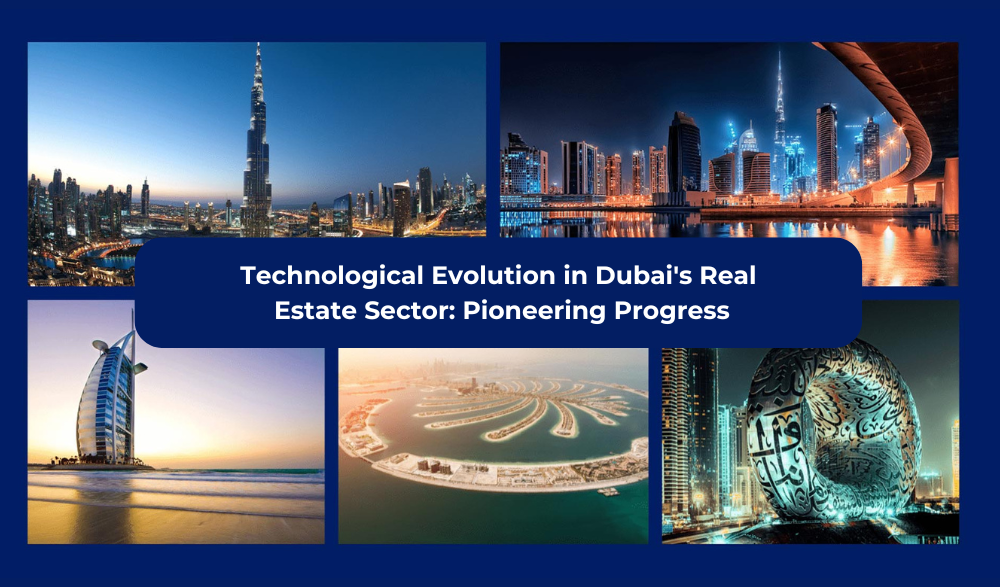
Technological Evolution in Dubai’s Real Estate Sector: Pioneering Progress

In the vibrant real estate landscape of Dubai, technology has become a catalyst for profound change, revolutionizing traditional practices and shaping the future of the industry. From modern online listings to blockchain-powered transactions, these advancements are redefining the way business is conducted in one of the world’s most dynamic property markets. Let’s explore the key technological strides that are driving Dubai’s real estate sector towards new horizons.

Online Property Discovery: Unveiling Boundless Opportunities

The shift towards online property listings and virtual tours has transformed the property discovery process in Dubai. Platforms such as Property Finder, Bayut, and Dubizzle have emerged as digital hubs, offering a vast array of properties at the click of a button. Through immersive virtual tours, prospective buyers can explore properties remotely, gaining valuable insights and saving precious time. This digital revolution has democratized access to property information, empowering individuals to make informed decisions from anywhere in the world.

Insightful Data Analytics: Empowering Informed Decision-Making

Data analytics and machine learning algorithms are empowering real estate companies in Dubai to harness the power of data for strategic decision-making. By analysing large datasets, these technologies unlock valuable insights into market trends, enabling stakeholders to anticipate shifts and adapt their strategies accordingly.

Blockchain: Redefining Transactional Integrity

Blockchain technology has emerged as a game-changer in ensuring transparency and security in real estate transactions. By leveraging decentralized ledgers and smart contracts, blockchain eliminates the need for intermediaries, streamlines transaction processes, and enhances trust among stakeholders. The Dubai Land Department’s pioneering adoption of blockchain has set a precedent for the industry, paving the way for seamless, tamper-proof property transactions that uphold the highest standards of integrity and reliability.

Global Connectivity: Bridging Borders with Technology

Dubai’s technological advancements in real estate extend far beyond its borders, fostering global connectivity and accessibility in the international property market. With its strategic location and robust economy, Dubai has become a magnet for global real estate investors. Technologies like virtual tours have bridged geographical barriers, allowing international buyers to explore properties remotely and make informed investment decisions. Additionally, online property management systems have simplified cross-border property management, enabling landlords and managers to oversee their assets seamlessly, regardless of location.

Dubai’s Innovation Hub: Embracing the Future

Dubai’s real estate sector is synonymous with innovation, embracing cutting-edge technologies to deliver unparalleled customer experiences and operational efficiencies. From AI-driven chatbots to aerial drone photography, Dubai continues to push the boundaries of innovation, setting new standards for the industry worldwide. Virtual property tours have seen a surge in popularity, while drone footage has become a staple feature in property listings, offering buyers immersive glimpses into their future homes.

Navigating Challenges, Seizing Opportunities

While technological advancements offer immense promise, the real estate industry in Dubai faces its share of challenges. Regulatory complexities, adoption hurdles, and cybersecurity risks loom large on the path to digital transformation. However, these challenges also present opportunities for further innovation and collaboration. Dubai’s commitment to digital excellence, evidenced by initiatives like the Emirates Blockchain Strategy, underscores its unwavering determination to embrace the future with open arms, driving efficiency, transparency, and prosperity for all.

In summary, technology is reshaping Dubai’s real estate sector, propelling it towards new heights of innovation and connectivity. With a forward-thinking approach and a commitment to embracing emerging technologies, Dubai’s real estate market is poised to remain a global leader, offering endless opportunities for investors, developers, and buyers alike. As the city continues its journey towards digital transformation, the future of real estate in Dubai shines brightly, promising a world of possibilities and potential for all involved.