Introduction
Manufacturing industries are rapidly moving toward automation, smart factories, and Industry 4.0-driven operations. While production systems are becoming more advanced, many organizations still rely on outdated Excel sheets to manage workforce skills, certifications, training records, and competency tracking. Although spreadsheets may have worked in the past, they are no longer capable of supporting the speed, complexity, and scale of modern manufacturing environments.
Today’s manufacturing leaders require real-time workforce visibility, faster decision-making, better compliance management, and data-driven workforce planning. This is where digital skill matrix systems are becoming essential.
A digital skill matrix helps organizations track employee competencies, identify skill gaps, improve productivity, and simplify workforce management through a centralized digital platform.
The Challenges of Manual Skill Tracking
In many manufacturing plants, workforce competency management still depends heavily on spreadsheets and manual reporting systems. HR teams and plant managers often maintain separate Excel files for certifications, machine handling capabilities, safety training records, and employee skill levels. Over time, this creates operational inefficiencies and data inconsistencies.
One of the biggest problems with Excel-based tracking is the lack of real-time updates. Employee data can quickly become outdated, making it difficult for management teams to identify current workforce capabilities accurately. Manual data entry also increases the chances of human errors, duplicate records, and missing information.
During audits or compliance reviews, retrieving updated workforce records from multiple spreadsheets becomes time-consuming and stressful. In industries such as automotive and engineering manufacturing, where compliance and safety standards are critical, this can create serious operational risks.
Why Workforce Skill Visibility Matters
Modern factories require highly skilled and adaptable employees capable of working with automated systems, robotics, ERP platforms, and smart manufacturing technologies. As Industry 4.0 adoption increases, workforce competency becomes directly linked to operational efficiency and productivity.
Without clear visibility into employee skills and certifications, organizations struggle with improper workforce allocation, delayed production schedules, training inefficiencies, compliance risks, and reduced productivity.
A digital skill matrix enables organizations to manage workforce readiness proactively instead of reacting to operational challenges after they occur.
What is a Digital Skill Matrix?
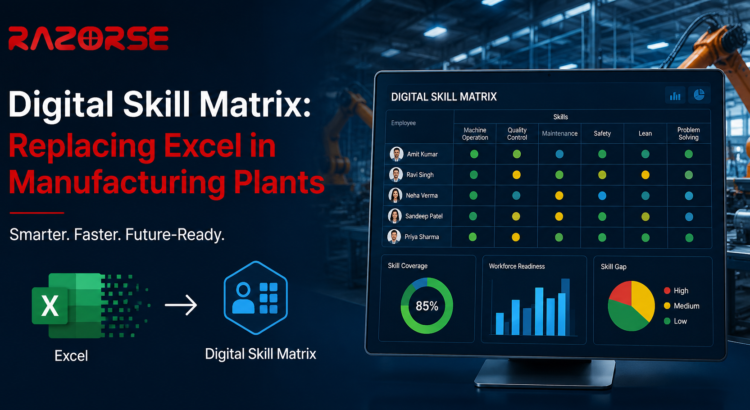
A digital skill matrix is a centralized platform that tracks workforce competencies, certifications, training progress, and employee proficiency levels in real time. Unlike static spreadsheets, digital systems provide automated updates, centralized visibility, and actionable insights for workforce planning.
These systems help organizations monitor employee skills across departments, identify competency gaps instantly, track training and certification status, improve workforce planning, simplify compliance management, and generate real-time reports and dashboards.
This creates a more structured and intelligent approach to workforce management.
Key Benefits of Digital Skill Matrix Systems
One of the biggest advantages of digital skill matrix platforms is improved workforce productivity. Managers can instantly identify skilled employees for specific operations, reducing delays and improving resource utilization.
Digital systems also strengthen compliance management by automatically tracking certifications, safety training renewals, and mandatory workforce requirements. Instead of manually monitoring expiry dates, organizations receive automated alerts and updates.
Another major benefit is faster employee upskilling. By identifying skill gaps clearly, HR and training teams can create targeted learning programs instead of conducting generalized training sessions. This improves workforce competency while reducing unnecessary training costs.
Additionally, digital platforms reduce dependency on manual administrative work. Centralized systems eliminate the need for maintaining multiple spreadsheets and improve collaboration across departments.
How DOJO 2.0 Supports Workforce Digitization
As manufacturing operations become more complex, organizations require intelligent workforce management solutions that align with Industry 4.0 goals. DOJO 2.0 is designed to help manufacturing companies digitize workforce competency management efficiently.
The platform enables organizations to track employee skills, certifications, training records, and workforce readiness through a centralized digital system. Instead of relying on disconnected spreadsheets, companies gain real-time visibility into workforce performance and competency levels.
DOJO 2.0 helps organizations digitize workforce management processes, improve operational visibility, identify workforce gaps quickly, strengthen compliance readiness, improve workforce productivity, and support data-driven decision-making.
This creates a smarter and more scalable workforce management ecosystem for modern manufacturing plants.
Real-World Manufacturing Scenario
Consider an automotive manufacturing plant operating multiple production lines across different shifts. Employees may require different certifications for machine handling, safety operations, and quality processes. Managing this information manually across spreadsheets becomes highly inefficient.
With a digital skill matrix, supervisors can instantly identify which employees are certified for specific machines, which workers require retraining, which teams have competency shortages, and which certifications are about to expire.
This improves workforce allocation, minimizes production disruptions, and ensures operational continuity.
The Future of Workforce Management
The future of manufacturing will depend heavily on workforce digitization and intelligent operational systems. Companies that continue relying on spreadsheets may struggle to manage growing operational complexity effectively.
Digital workforce management systems are becoming essential for Industry 4.0 transformation, smart factory implementation, AI-driven manufacturing operations, workforce optimization, and compliance management.
Organizations investing in workforce digitization today will build stronger operational foundations for the future.
Conclusion
Excel sheets are no longer sufficient for managing workforce competency in modern manufacturing environments. Digital skill matrix systems provide the visibility, efficiency, and intelligence required for effective workforce management.
By adopting platforms like DOJO 2.0, manufacturing organizations can improve productivity, strengthen compliance, reduce operational inefficiencies, and prepare their workforce for Industry 4.0 transformation.
Looking to replace manual workforce tracking with a smarter digital solution? Connect with Razorse Software to explore how DOJO 2.0 can help your manufacturing plant digitize workforce competency management and improve operational efficiency.