24/7 Support : info@razorse.com | WhatsApp : +91-7011221090

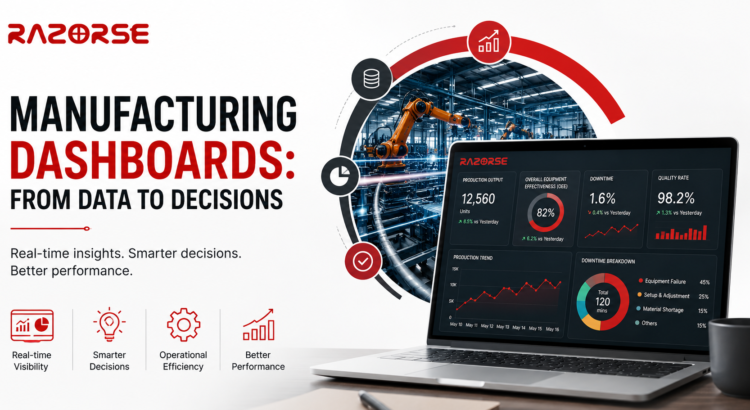
Manufacturing Dashboards: From Data to Decisions

Introduction

Modern manufacturing plants generate massive volumes of operational data every day. Machines produce performance metrics, production lines generate output data, maintenance teams track downtime, and ERP systems manage inventory, procurement, and workforce operations. Despite having access to this information, many organizations still struggle to convert data into actionable business insights.

This is where manufacturing dashboards are transforming industrial operations.

Real-time dashboards help manufacturing organizations centralize critical operational data into a single visual interface, enabling faster decisions, improved productivity, and greater operational visibility. In today’s Industry 4.0 environment, dashboard-driven manufacturing is becoming a key driver of smart factory transformation.

The Problem with Data Silos

Many manufacturing plants still operate using disconnected systems across departments. Production teams, maintenance departments, HR units, and inventory managers often rely on separate software systems or spreadsheets that do not communicate efficiently with one another.

This creates major operational challenges. Leadership teams spend significant time manually collecting reports before making decisions. By the time the data is reviewed, it may already be outdated.

Without real-time visibility, organizations struggle to identify production bottlenecks, downtime causes, quality issues, and operational inefficiencies quickly.

Why Real-Time Manufacturing Dashboards Matter

Manufacturing dashboards eliminate fragmented reporting structures by centralizing operational data into one platform. Instead of waiting for end-of-day reports, plant managers can monitor live operational performance in real time.

This enables organizations to respond faster to production issues, improve machine utilization, reduce downtime, optimize workforce allocation, improve production planning, and enhance quality control.

Real-time visibility allows organizations to shift from reactive operations to proactive decision-making.

Key Metrics Every Plant Should Monitor

Manufacturing dashboards provide visibility into critical operational KPIs that directly impact productivity and profitability.

One of the most important metrics is Overall Equipment Effectiveness (OEE), which measures machine productivity through availability, performance, and quality analysis. Monitoring OEE helps organizations identify operational inefficiencies quickly.

Downtime tracking is another critical area. Dashboards allow supervisors to monitor planned and unplanned downtime in real time, helping maintenance teams reduce operational disruptions.

Production output tracking helps organizations compare shift performance, monitor production targets, and improve manufacturing efficiency. Similarly, rejection and defect rate monitoring strengthens quality control by identifying production inconsistencies early.

Dashboards also provide visibility into workforce productivity and machine utilization, enabling smarter operational planning and resource optimization.

Benefits of Dashboard-Driven Manufacturing

One of the biggest benefits of manufacturing dashboards is faster decision-making. Leadership teams no longer need to wait for manual reports before responding to operational issues. Instead, they gain instant access to live production insights.

Dashboards also improve operational efficiency by helping organizations identify bottlenecks, recurring downtime patterns, and process inefficiencies quickly. This supports continuous operational improvement.

Another major advantage is improved collaboration across departments. Since all teams access the same operational data, communication becomes more transparent and aligned.

Manufacturing dashboards also support the development of a data-driven organizational culture. Instead of relying solely on assumptions or historical trends, organizations can make decisions based on real-time operational intelligence.

ERP and IoT Integration in Smart Manufacturing

Modern dashboards become even more powerful when integrated with ERP systems and Industrial IoT technologies.

ERP integrations allow organizations to connect operational data with inventory management, procurement planning, workforce allocation, maintenance schedules, and supply chain operations.

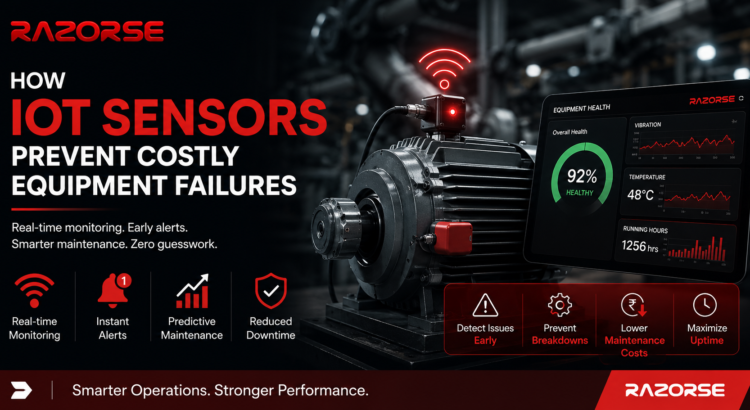
Meanwhile, IoT-enabled devices provide real-time machine-level data directly from the shop floor. Sensors can monitor temperature, vibration, performance efficiency, and machine utilization continuously.

Together, ERP systems and IoT technologies create a connected smart manufacturing ecosystem powered by real-time visibility.

Real-World Manufacturing Example

Imagine a manufacturing plant facing repeated production delays due to machine breakdowns and maintenance inefficiencies. In traditional environments, problems may only be identified after major production losses occur.

With real-time dashboards, supervisors receive instant alerts whenever machine performance drops or downtime increases. Maintenance teams can respond immediately, reducing disruptions and improving operational continuity.

This proactive approach improves productivity, reduces costs, and enhances overall equipment reliability.

The Future of Smart Manufacturing

As Industry 4.0 adoption accelerates, manufacturing dashboards are evolving into intelligent decision-support systems powered by AI and analytics.

Modern dashboards can now predict operational trends, identify performance anomalies, recommend corrective actions, and improve production forecasting.

Organizations investing in dashboard-driven operations today are building stronger foundations for smart factory transformation and long-term competitiveness.

Conclusion

Data alone does not create value. The ability to convert operational data into actionable insights is what drives manufacturing excellence.

Manufacturing dashboards help organizations improve visibility, optimize productivity, reduce downtime, and support faster decision-making. As manufacturing environments become more connected and data-driven, dashboards will play a central role in Industry 4.0 transformation.

CTA

Looking to build intelligent manufacturing dashboards integrated with ERP and IoT technologies? Connect with Razorse Software to explore smart dashboard solutions designed for modern manufacturing operations.

How to Improve Lead Quality Without Increasing Your Marketing Budget

In today’s digital landscape, generating leads is no longer the biggest challenge for businesses. The real issue lies in generating leads that actually convert. Many companies invest heavily in marketing campaigns, only to find that a large portion of their leads lack intent, relevance, or buying potential. The good news is that improving lead quality does not require increasing your marketing budget. With the right strategy, focus, and optimization, businesses can attract more meaningful leads while using existing resources more effectively.

Understanding What Lead Quality Really Means

Lead quality refers to how closely a prospect aligns with your ideal customer profile and how likely they are to convert into a paying customer. A quality lead typically has a clear need, decision-making authority, and genuine interest in your solution. When businesses fail to define this clearly, marketing efforts often prioritize quantity over relevance, resulting in wasted time and lower conversion rates. Improving lead quality begins with clarity-knowing exactly who your solution is meant for and why they need it.

Focusing on the Right Audience Instead of a Bigger Audience

One of the most common mistakes businesses make is trying to reach everyone. Broad targeting may increase traffic, but it rarely brings in serious buyers. Instead of expanding reach, narrowing your audience based on industry, role, company size, and pain points helps attract prospects who are more likely to engage. When messaging speaks directly to a specific audience, it resonates more strongly and naturally filters out low-intent users-without increasing ad spend.

Key Strategies to Improve Lead Quality Without Increasing Budget

Improving lead quality is more about precision than promotion. When marketing efforts are aligned with clear objectives, results improve naturally. Businesses that focus on clarity in messaging and intent in targeting often see higher conversion rates with the same budget.

Key focus areas include:

  • Clearly defining your ideal customer profile to attract relevant prospects
  • Narrowing targeting instead of expanding reach
  • Using precise messaging on landing pages to filter low-intent users
  • Creating high-value content that attracts informed, high-intent prospects
  • Aligning sales and marketing teams on lead qualification criteria

These strategies help ensure that marketing efforts attract prospects who are genuinely interested and better suited for your offerings.

Creating Landing Pages That Qualify Leads Automatically

Landing pages play a crucial role in determining lead quality. While attractive design is important, clarity matters more. When landing pages clearly communicate who the solution is for, what problems it solves, and what value it delivers, they act as a natural filter. Including qualifying form fields such as company size or business needs further ensures that only serious prospects move forward. Even if total submissions decrease slightly, the quality of leads improves significantly.

Using Content to Attract High-Intent Prospects

Content marketing is one of the most effective ways to improve lead quality without increasing spend. Blogs, case studies, and solution-focused content educate prospects before they reach out. This self-qualification process ensures that leads who engage with your business already understand your value proposition. As a result, content-driven leads tend to convert faster, require less nurturing, and show stronger buying intent.

How to Maximize Conversions from Existing Leads

Often, businesses assume leads are low quality when the real issue lies in how they are handled. Slow responses, generic follow-ups, and lack of personalization can cause promising prospects to disengage. Improving how leads are nurtured can significantly increase conversion rates without spending more on acquisition.

To improve conversions from current leads:

  • Respond faster to inquiries while interest is high
  • Personalize follow-ups based on prospect behavior and intent
  • Track conversion-focused metrics instead of vanity metrics
  • Strengthen lead nurturing workflows to build trust over time
  • Leverage referrals and customer success stories

Small improvements in follow-up strategy often deliver greater impact than generating new leads.

Measuring What Actually Impacts Lead Quality

Tracking the right metrics is essential for sustainable improvement. Instead of focusing on clicks or impressions, businesses should analyze lead-to-conversion ratios, sales acceptance rates, and revenue contribution by channel. These insights help identify which efforts bring in serious buyers and which generate noise. Data-driven decisions allow teams to optimize existing strategies rather than increase spend.

Final Thoughts

Improving lead quality is not about bigger budgets-it’s about smarter execution. By focusing on clarity, targeting, content, and follow-up strategies, businesses can attract leads that are more relevant, engaged, and ready to convert.

At Razorse Software, we help businesses build intelligent digital strategies that prioritize quality over quantity. Our approach ensures you attract the right audience, convert high-intent leads, and drive sustainable growth-without unnecessary marketing spend.

Cost Comparison: Paid Ads Leads vs Organic Leads – What Gives Better ROI?

Lead generation is one of the most critical aspects of business growth in today’s digital economy. As competition increases across industries, companies are under constant pressure to acquire quality leads while controlling marketing costs. Two primary strategies dominate this space-paid advertising and organic lead generation. While both methods are effective, they differ greatly in cost structure, scalability, lead quality, and long-term return on investment. Understanding these differences helps businesses choose the right strategy based on their goals and growth stage.

Paid Ads Leads: Quick Results with Higher Ongoing Costs

Paid advertising is often the first choice for businesses seeking quick results. Platforms such as Google Ads, LinkedIn Ads, and social media networks allow brands to instantly place their offerings in front of a targeted audience. This immediate visibility is especially useful for new businesses, product launches, or campaigns that require rapid traction. With the right targeting and messaging, paid ads can generate leads within hours or days, making them a powerful short-term growth tool.

However, the cost factor cannot be ignored. Paid advertising operates on a bidding model, which means costs rise as competition increases. In sectors such as software, technology, and B2B services, cost per click and cost per lead can become significantly high. Businesses often find themselves spending more just to maintain the same lead volume. Additionally, paid ads require continuous monitoring and optimization to avoid wasted spend. Once the ad budget is paused, lead generation stops immediately, making paid ads a temporary and budget-dependent solution.

Organic Leads: Slower Start but Strong Long-Term Value

Organic lead generation follows a very different approach. Instead of paying for visibility, businesses invest in building authority through SEO, content marketing, social media presence, and consistent engagement. Organic leads are generated when users discover a brand naturally while searching for information, solutions, or industry insights. This method focuses on long-term value rather than instant results.

Although organic strategies take time to show measurable outcomes, they offer strong cost advantages over the long term. Once content ranks well on search engines or gains traction through social channels, it continues to attract leads without additional spending. Over time, the cost per lead decreases significantly, making organic marketing one of the most cost-effective lead generation methods. More importantly, organic leads tend to be more informed and trust-driven, which positively impacts conversion rates.

ROI Comparison: Short-Term Impact vs Long-Term Growth

When comparing ROI, the difference between short-term and long-term performance becomes clear. Paid ads deliver faster ROI initially, but returns may decline as costs rise and campaigns fatigue. Organic lead generation may appear slower at the beginning, but ROI improves steadily as content, rankings, and brand credibility grow. Businesses that rely only on paid ads often face fluctuating results, while those investing in organic growth benefit from compounding returns over time.

Key Differences Between Paid Ads Leads and Organic Leads

  • Paid ads generate quick results but require ongoing budget allocation
  • Organic leads take longer to build but offer long-term sustainability
  • Paid leads may have lower initial trust compared to organic leads
  • Organic strategies help reduce dependency on rising ad costs

Another important aspect of ROI is lead quality. Organic leads usually come from users who have actively searched for a solution and engaged with relevant content. This means they are often more educated about the problem and more aligned with the offering. As a result, organic leads tend to have higher engagement levels, better conversion rates, and stronger long-term value.

Conclusion: Choosing the Right Lead Generation Mix

Paid leads, while faster to acquire, may require additional nurturing to build trust. Many users click ads out of curiosity rather than intent, especially in competitive markets. This does not mean paid leads are ineffective, but it highlights the importance of having strong landing pages, follow-up strategies, and conversion funnels in place to maximize ROI.

From a strategic perspective, paid ads work best for immediate demand capture, promotions, and market testing. Organic marketing works best for building brand authority, reducing acquisition costs, and creating a sustainable lead pipeline. Businesses that focus only on organic growth may miss out on short-term opportunities, while those relying entirely on paid ads risk long-term cost inefficiencies.

The most successful businesses adopt a balanced approach. By using paid ads to generate immediate visibility and organic strategies to support long-term growth, companies can achieve consistent lead flow at an optimized cost. This combination allows businesses to scale efficiently while maintaining control over ROI.

At Razorse Software, we help businesses design integrated lead generation strategies that combine performance marketing with strong organic growth foundations. Our focus is on delivering measurable ROI by aligning marketing efforts with business objectives, reducing dependency on high ad spend, and building sustainable digital growth models.

#LeadGeneration #DigitalMarketing #PaidAds #OrganicGrowth #MarketingROI #B2BMarketing #GrowthStrategy #RazorseSoftware

AI Agents vs. Chatbots -What’s Changing in Customer Experience?

Customer experience (CX) has been undergoing a massive transformation over the past decade, driven largely by advancements in artificial intelligence. From simple scripted chat windows to intelligent, autonomous decision-making digital assistants, the shift is undeniable. Businesses that once relied on traditional chatbots are now embracing advanced AI Agents to deliver faster, more personalized, and more meaningful customer interactions.

At Razorse, we’ve witnessed this evolution firsthand while helping brands integrate next-generation AI solutions. But what exactly makes AI Agents so different from chatbots-and why are they becoming the new standard for customer engagement? Let’s break it down.

From Chatbots to AI Agents: Understanding the Shift

1. Traditional Chatbots: The Rule-Based Responders

When chatbots first became popular, they were seen as a promising solution to reduce customer service workload. However, most early chatbots relied heavily on predefined scripts, keyword matching, or basic branching logic.

While useful for frequently asked questions-like order tracking, store hours, or payment instructions-they struggled when a customer asked something unexpected or phrased in an unusual way. Their limitations included:

  • Inability to understand context
  • Rigid, repetitive replies
  • Dependency on manual scripts
  • Minimal personalization
  • Escalations to human agents for anything complex

Traditional chatbots excel at speed, but not sophistication. As customer expectations grew, businesses needed something more intelligent-something capable of handling the nuances of real human conversation.

2. AI Agents: The Autonomous, Context-Aware Problem Solvers

AI Agents represent a new generation of intelligent systems powered by advanced machine learning, generative AI, and autonomous workflows. Rather than simply responding to messages, AI Agents can take actions, reason, adapt, and learn from interactions.

What sets AI Agents apart?

Contextual Understanding

AI Agents don’t just match keywords-they interpret intent, tone, and context. They can follow long, multi-step conversations without losing track.

Autonomous Task Execution

They can do more than answer questions. AI Agents can perform tasks such as:

  • Filling out forms
  • Making bookings
  • Updating customer records
  • Troubleshooting issues
  • Integrating with CRM or ERP systems

This makes them true digital workers rather than simple responders.

Continuous Learning

AI Agents improve over time as they process more conversations, building richer understanding of customer patterns and preferences.

Hyper-Personalization

With access to customer data (securely managed), they can offer custom recommendations, tailored solutions, and personalized communication-creating a more human-like experience.

How AI Agents Are Transforming Customer Experience

1. Faster Resolution with Fewer Escalations

AI Agents can handle complex requests end-to-end, reducing the need to involve human support teams. This means shorter wait times and higher first-contact resolution rates.

2. 24/7 Intelligent Support

While chatbots also offer round-the-clock availability, AI Agents bring accuracy, empathy, and real-time decision-making to every interaction-day or night.

3. Omnichannel Presence

Whether customers reach out via web, mobile app, WhatsApp, email, or social channels, AI Agents maintain continuity. They remember past interactions and deliver consistent service across touchpoints.

4. Improved Human + AI Collaboration

AI Agents don’t replace humans-they augment them. By handling repetitive workflows, they free human teams to focus on strategy, relationship-building, and high-value tasks.

5. Increased Customer Satisfaction

Customers crave quick, accurate, and personalized support. AI Agents meet these expectations without the robotic feel typical of old chatbots.

Where Razorse Fits In

At Razorse, we help businesses unlock the full potential of AI Agents by integrating them seamlessly into their digital ecosystems. Whether you need intelligent support automation, AI-driven customer journeys, or end-to-end conversational AI solutions, our team ensures:

  • Custom-built AI Agents tailored to your business
  • CRM, ERP, and backend integrations
  • Human-like conversational design
  • Security-first AI deployment
  • Scalable automation for every industry

We don’t believe in one-size-fits-all chatbots. Instead, we build smart, adaptive AI Agents that elevate your customer experience, operational efficiency, and brand loyalty.

The Future: AI Agents as Digital Colleagues

In the next few years, AI Agents will move beyond customer service and become digital coworkers across departments-sales, marketing, HR, finance, IT, and more. Businesses adopting AI Agents today will gain a competitive advantage, while those relying solely on chatbots may struggle to keep up with rising customer expectations.

This evolution isn’t just about technology-it’s about delivering better, faster, and more meaningful human experiences with the help of intelligent automation.

Final Thoughts

The shift from chatbots to AI Agents represents the next major chapter in customer experience innovation. While chatbots served their purpose, AI Agents offer the intelligence, adaptability, and autonomy needed in a world where customer expectations continue to rise.

If your organization is ready to move beyond scripted interactions and into the future of intelligent customer engagement, Razorse can help you build AI solutions that truly transform your business.

#Razorse #AIAgents #Chatbots #CustomerExperience #CXM #DigitalTransformation #AIinBusiness #Automation #GenerativeAI #TechInnovation #FutureOfCX

How a VMS Enhances Security and Compliance for Businesses

In today’s fast-changing digital and physical business environment, ensuring security and compliance is not just an option-it’s a necessity. Organizations of all sizes deal with constant risks, whether it’s unauthorized access to premises, mishandling of sensitive data, or failing to meet regulatory requirements. One effective solution that has emerged to address these challenges is a Visitor Management System (VMS).

A VMS goes beyond the traditional sign-in sheet or reception logbook. It integrates technology, security protocols, and compliance requirements to provide a seamless way of tracking, managing, and securing visitors, contractors, and employees. By digitizing and automating visitor processes, businesses not only strengthen security but also reduce operational inefficiencies while ensuring adherence to regulatory standards.

Strengthening On-Site Security

The first and most visible advantage of a Visitor Management System is improved security. Traditional visitor logs are prone to errors, manipulation, and unauthorized access. A VMS eliminates these weaknesses by digitizing the entire visitor lifecycle-from pre-registration to check-in and check-out.

  • Identity Verification: Visitors can be required to submit government IDs, QR codes, or biometric verification, ensuring only authorized individuals enter the premises.
  • Real-Time Monitoring: Security teams can track who is inside the building at any given time, along with their purpose and location.
  • Access Control Integration: A modern VMS can be connected to access control systems, restricting visitor movement to specific zones. For instance, contractors can be limited to work areas without access to sensitive offices or data centers.

By making entry points more controlled and transparent, a VMS greatly reduces the chances of security breaches.

Ensuring Regulatory Compliance

Regulatory requirements in industries such as healthcare, finance, and IT have become stricter than ever. From GDPR and HIPAA to ISO and PCI-DSS, organizations must demonstrate that they have adequate processes for tracking access and maintaining records. A VMS simplifies this.

  • Automated Audit Trails: The system maintains digital logs of every visitor, complete with timestamps, entry points, and duration of stay. These records can be easily retrieved during audits.
  • Data Privacy Controls: Unlike paper logs, where personal details are visible to everyone, a VMS protects sensitive data with encryption and access permissions.
  • Compliance Workflows: Customized workflows allow businesses to enforce compliance rules, such as signing NDAs, watching safety videos, or agreeing to security protocols before entry.

This not only reduces the risk of penalties for non-compliance but also builds trust among stakeholders and clients who expect organizations to handle sensitive data responsibly.

Enhancing Operational Efficiency

Security and compliance shouldn’t come at the cost of productivity. A Visitor Management System strikes the right balance by making processes faster and smarter.

  • Pre-Registration: Guests can be pre-registered, receiving QR codes or digital passes that allow quick entry without long wait times.
  • Instant Notifications: Hosts are automatically notified when their visitors arrive, ensuring a smooth and professional experience.
  • Centralized Dashboard: Admins and security staff can manage all visitor data from one centralized platform, reducing manual workloads and errors.

In this way, organizations not only improve their security posture but also deliver a better experience for employees, contractors, and clients.

Building Trust with Clients and Employees

In an age where security incidents often make headlines, businesses need to show that they take security and compliance seriously. A VMS plays an important role in building that confidence. Employees feel safer knowing that unauthorized individuals cannot roam freely around their workplace. Clients and partners see that the business is committed to maintaining the highest security and compliance standards, which improves reputation and reliability.

Integration with Emerging Technologies

Modern VMS platforms are no longer standalone tools. They can integrate with other enterprise systems to create a holistic security and compliance ecosystem.

  • IoT and Smart Devices: Integration with surveillance cameras, access control systems, and smart locks enhances visibility and control.
  • Cloud and Remote Management: Cloud-based VMS allows multi-location organizations to manage visitors across different sites with ease.
  • Analytics and Reporting: Advanced reporting features provide insights into visitor patterns, helping in both compliance audits and security planning.

By leveraging these integrations, organizations can future-proof their security strategy.

Long-Term Value of a VMS

While businesses may initially adopt a Visitor Management System for compliance purposes, the long-term value extends much further. It enables:

  • Stronger resilience against security threats
  • Improved compliance posture during audits
  • Enhanced operational workflows
  • Greater trust among employees, clients, and regulators

In short, a VMS is not just a tool for visitor tracking-it’s a strategic investment in security, compliance, and overall business growth.

Conclusion

In today’s business landscape, where both physical and digital security are under constant scrutiny, a Visitor Management System acts as a strong line of defense while ensuring compliance with regulatory frameworks. From securing sensitive areas and protecting data to maintaining audit-ready visitor logs, a VMS helps businesses stay safe, efficient, and future-ready.

At Razorse Software, we believe in enabling organizations with smart, secure, and scalable digital solutions. A VMS is a key example of how technology can simplify complex challenges while building trust and compliance. Businesses that adopt such systems today will not only protect their assets but also gain a competitive edge tomorrow.

#VisitorManagement #BusinessSecurity #Compliance #RazorseSoftware #DigitalTransformation

From Token Slips to Smart Kiosks: Evolution of Queue Management Technology!

Standing in long queues has always been one of the least enjoyable parts of our daily lives. Whether at a bank, hospital, government office, or retail store, waiting has traditionally been seen as a necessary inconvenience. Over the years, however, technology has completely reshaped how organizations handle queues and customer flow. What once started with paper token slips has now evolved into smart kiosks, mobile apps, and AI-powered systems designed to make waiting shorter, smoother, and in many cases, almost invisible.

The story of queue management is not just about reducing waiting times-it’s about transforming customer experience. Businesses have realized that the way they manage queues directly affects how customers perceive their brand. The evolution of this technology reflects both a growing demand for convenience and the rise of digital solutions that prioritize efficiency.

The Early Days: Paper Token Slips

In the beginning, queue management was manual and fairly simple. Visitors arriving at a service counter would collect a small paper slip with a number printed on it. This system introduced some fairness by ensuring people were served in the order they arrived, but it was far from perfect. Tokens were easy to lose, announcements were often unclear, and there was little visibility for customers about how long they would have to wait. For businesses, managing these paper slips was inefficient, offering no data or insights into customer flow.

Electronic Display Systems

The next phase saw the introduction of electronic display systems. Instead of relying on verbal announcements, businesses used LED screens or boards to show token numbers being served at different counters. This was a significant step forward. Customers could relax without constantly worrying about missing their turn, and the experience felt more organized. For organizations, it provided a more professional image, though the systems were still limited to displaying numbers and required manual updates from staff.

The Arrival of Digital Queue Systems

With the rise of computers in the 1990s and 2000s, queue management systems began to go digital. Instead of paper slips, electronic machines generated tokens that were linked to software. This allowed businesses to track wait times, measure customer flow, and even assign visitors to specific counters based on service needs. Data collection entered the picture, enabling managers to identify peak hours and allocate resources more effectively. For customers, it meant more structured queues and shorter waiting times.

Touchscreen Kiosks and Self-Service

The introduction of touchscreen kiosks marked a turning point. These kiosks allowed customers to select the service they needed upon arrival, automatically routing them to the correct counter or department. For example, in a hospital, patients could choose between general consultation, lab tests, or billing services. This helped streamline operations and ensured that customers didn’t have to waste time standing in the wrong line.

Self-service kiosks also improved personalization. By asking for basic details at the point of check-in, businesses could create a smoother experience and capture valuable information about customer behavior.

Mobile Apps and Remote Queueing

As smartphones became widespread, mobile-based queue management gained popularity. Customers could now book a slot or join a queue virtually using their phone before even arriving at the location. Apps could provide real-time updates, notify users when their turn was approaching, and reduce physical crowding in waiting areas.

This shift proved especially valuable during the COVID-19 pandemic, when minimizing physical contact became a priority. Virtual queueing allowed businesses to maintain social distancing while still offering efficient service. For customers, it provided flexibility and reduced the frustration of waiting in crowded spaces.

Smart Kiosks and AI Integration

Today, we’re witnessing the rise of smart kiosks powered by artificial intelligence, machine learning, and cloud technology. These kiosks go beyond issuing tokens-they analyze customer demand, predict waiting times, and even offer multilingual support. In some industries, kiosks are integrated with facial recognition or biometric verification for seamless check-ins.

AI-driven queue systems can dynamically allocate staff based on real-time demand, ensuring no counter remains underutilized. For example, in a busy bank branch, if the system notices an increasing queue for loans, it can reassign available staff from other services to balance the load.

Smart kiosks also support omnichannel integration, linking physical queues with online bookings, mobile apps, and even chatbots. Customers can interact with businesses across multiple touchpoints while still enjoying a unified and efficient experience.

The Future of Queue Management

Looking ahead, queue management is likely to become even more personalized and predictive. With the help of big data, businesses will be able to forecast peak times with high accuracy and prepare resources in advance. AI will allow systems to recognize repeat customers, understand their preferences, and tailor services accordingly.

Virtual and augmented reality may also play a role in creating interactive waiting experiences, turning downtime into an opportunity for engagement. Combined with IoT devices, we could see fully automated, contactless queue management becoming the norm across sectors.

Final Thoughts

The journey from simple paper slips to advanced smart kiosks highlights how far queue management technology has come. What was once a basic system to maintain order has transformed into a sophisticated solution that enhances customer satisfaction, streamlines operations, and provides businesses with actionable insights. In 2025 and beyond, organizations that adopt smart queue management systems will not only reduce waiting times but also deliver experiences that keep customers coming back.

At Razorse Software, we understand how technology shapes customer experiences. By embracing innovations like smart kiosks and AI-powered systems, businesses can stay ahead of the curve and build lasting trust with their users.

#QueueManagement #SmartKiosks #CustomerExperience #DigitalTransformation #RazorseSoftware