Introduction
The manufacturing landscape in India is undergoing a significant transformation. With rising global competition, increasing operational costs, and growing demand for efficiency and quality, traditional manufacturing models are no longer sufficient. Companies that continue to rely on outdated processes risk losing their competitive edge in an increasingly digital world.
This shift has led to the emergence of Industry 4.0, often referred to as the fourth industrial revolution. It represents a new era where advanced technologies are integrated into manufacturing processes to create smarter, more efficient, and highly connected operations.
For Indian manufacturers—especially SMEs—Industry 4.0 is not just a trend but a necessity for long-term growth and sustainability.
Challenges in Traditional Manufacturing
Despite technological advancements, many manufacturing units in India still operate using conventional methods. These include manual data entry, disconnected systems, and limited real-time visibility into operations.
Such limitations create several challenges. Machine breakdowns often occur without warning, leading to unplanned downtime and production delays. Workforce management becomes inefficient due to a lack of visibility into employee skills and performance. Decision-making is often delayed because data is either unavailable or outdated.
As businesses scale, these inefficiencies multiply, resulting in higher operational costs, inconsistent product quality, and reduced profitability. Without adopting digital solutions, it becomes difficult for manufacturers to remain competitive in both domestic and global markets.
What is Industry 4.0?
Industry 4.0 refers to the digital transformation of manufacturing, where machines, systems, and people are interconnected through advanced technologies. It enables seamless communication between different components of the production ecosystem, allowing for real-time data exchange and intelligent decision-making.
At its core, Industry 4.0 combines several key technologies. The Internet of Things (IoT) connects machines and devices through sensors, enabling real-time data collection. Artificial Intelligence (AI) and machine learning analyze this data to generate insights and predictions. Cloud computing provides centralized access to information, while advanced analytics helps organizations optimize processes and improve efficiency.
Together, these technologies create a smart manufacturing environment that is adaptive, efficient, and data-driven.
Smart Factory vs Traditional Factory
In a traditional factory setup, operations are largely manual and reactive. Data is collected periodically, often on paper or spreadsheets, and decisions are made based on past performance. Maintenance activities are typically carried out only after a machine fails, leading to costly downtime and disruptions.
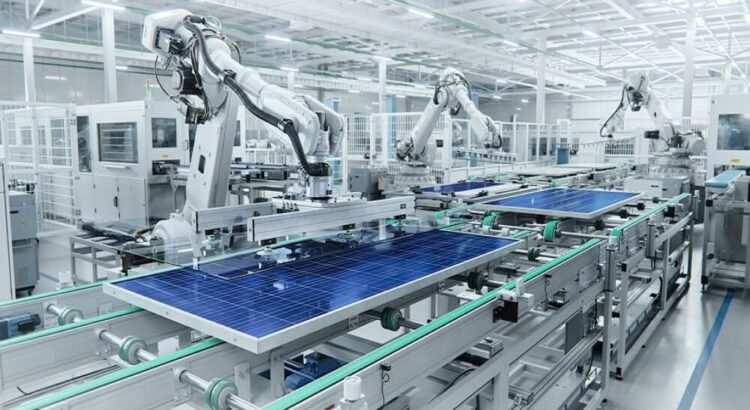
In contrast, a smart factory operates on real-time data and automation. Machines are connected through sensors that continuously monitor performance. Maintenance becomes predictive, meaning potential issues are identified and resolved before they lead to breakdowns. Workforce management is digitized, allowing managers to track skills, productivity, and training needs efficiently.
Most importantly, decision-making in a smart factory is fast, accurate, and data-driven. This results in higher productivity, improved quality, and significant cost savings.
Key Benefits of Industry 4.0
Adopting Industry 4.0 offers several tangible benefits for manufacturers. One of the most significant advantages is increased productivity. Automation and real-time monitoring allow companies to optimize their operations and reduce inefficiencies.
Another major benefit is reduced downtime. With predictive maintenance systems in place, machines are monitored continuously, and potential failures are addressed before they occur. This ensures smoother production cycles and minimizes disruptions.
Quality improvement is another critical outcome. Real-time inspection and monitoring systems help detect defects early, ensuring consistent product quality. Additionally, better data visibility enables faster and more informed decision-making.
Cost optimization is also a key advantage. By reducing waste, improving resource utilization, and minimizing downtime, manufacturers can significantly lower their operational expenses.
Practical Use Cases in Manufacturing
Industry 4.0 is not just a concept—it is already being implemented across various manufacturing sectors.
One common use case is predictive maintenance, where AI analyzes machine data to predict failures in advance. Another is real-time production monitoring, where dashboards provide instant insights into plant performance.
Digital workforce management is also gaining importance. By tracking employee skills and performance digitally, manufacturers can ensure optimal workforce utilization. Additionally, AI-powered quality inspection systems are being used to detect defects with greater accuracy than manual processes.
These applications demonstrate how Industry 4.0 can deliver measurable improvements in efficiency and performance.
How Razorse Enables Industry 4.0
Razorse Software plays a crucial role in helping manufacturers adopt Industry 4.0 solutions. With a strong focus on innovation and practical implementation, Razorse offers a range of technologies designed to drive digital transformation.
One of the key offerings is DOJO 2.0, a workforce management platform that enables real-time skill tracking and productivity improvement. In addition, Razorse provides AI-driven analytics for predictive maintenance and decision-making.
The company also specializes in ERP integrations, ensuring seamless data flow across systems, and VR-based training solutions that enhance workforce safety and skill development. Together, these solutions help manufacturers transition smoothly into smart, connected operations.
Conclusion
Industry 4.0 is redefining the future of manufacturing. For Indian manufacturers, adopting digital technologies is no longer optional—it is essential for staying competitive in a rapidly evolving market.
Organizations that embrace Industry 4.0 today will be better equipped to improve efficiency, reduce costs, and scale their operations effectively. Those that delay adoption risk being left behind.CTA
Ready to transform your manufacturing operations?
Get in touch with Razorse Software for a personalized Industry 4.0 consultation and take the first step toward building a smart factory.