24/7 Support : info@razorse.com | WhatsApp : +91-7011221090

supplier qaulity management

Supplier Quality Management: Improve Manufacturing Quality

Supplier Quality Management: How Manufacturers Can Improve Quality, Reduce Defects and Build Reliable Supply Chains

Supplier Quality Management

Introduction

Manufacturing quality doesn’t begin on the production floor. It starts much earlier, with the suppliers responsible for delivering raw materials, components and essential resources. Supplier Quality Management is responsible for that.

Even when a manufacturer has advanced machinery, skilled employees and well-defined production processes, poor-quality incoming materials can affect the entire operation.

A delayed shipment, inconsistent component quality or repeated supplier defects can lead to production downtime, rework, increased costs and missed delivery deadlines.

This is where Supplier Quality Management (SQM) becomes important.

Supplier Quality Management is a structured approach to evaluating, monitoring and improving supplier performance to ensure that the materials and components entering a manufacturing facility meet the required quality standards.

Let’s understand how it works and why it matters for modern manufacturing.

What Is Supplier Quality Management?

Supplier Quality Management is the process of ensuring that vendors consistently meet an organisation’s quality, compliance and delivery requirements.

It goes beyond selecting suppliers based on pricing and availability. It involves continuously assessing their performance, inspecting incoming materials, identifying quality issues and working with vendors to prevent recurring problems.

An effective supplier quality management process helps manufacturers maintain consistent product quality while building stronger relationships with their supply chain partners.

Why Is Supplier Quality Management Important in Manufacturing?

A manufacturing process depends on several interconnected activities. When one supplier fails to meet expectations, the impact can extend across multiple production stages.

Here are some important reasons why manufacturers need a structured supplier quality process.

1. Reduces Incoming Material Defects

Inspecting materials before they enter production helps identify damaged, incorrect or non-compliant components early. This prevents defective materials from moving further into the manufacturing process.

2. Minimises Production Disruptions

Unreliable suppliers and inconsistent material quality can interrupt production schedules. Monitoring supplier performance helps manufacturers identify potential issues before they affect operations.

3. Controls Quality-Related Costs

Defective materials often result in additional inspection, rework, replacement and production delays. Preventing these issues at the supplier level helps reduce avoidable operational expenses.

4. Improves Supplier Accountability

Clear quality expectations, performance reports and corrective action processes encourage suppliers to take responsibility for the materials they deliver.

3 Key Components of an Effective Supplier Quality Management Process

A strong supplier quality management strategy focuses on three essential areas.

1. Supplier Performance Ratings

Not every supplier delivers the same level of consistency.

Manufacturers need a structured way to evaluate vendors based on measurable performance indicators.

Common supplier evaluation parameters include:

  • Defect Rate: Percentage of materials or components rejected due to quality issues.
  • On-Time Delivery: How consistently suppliers meet agreed delivery schedules.
  • Quality Compliance: Whether supplied materials meet technical specifications and quality standards.
  • Response Time: How quickly suppliers respond to quality complaints and corrective action requests.

Using supplier scorecards helps manufacturers compare vendor performance, identify reliable partners and recognise suppliers who require improvement.

2. Incoming Quality Inspections

Supplier quality doesn’t end when materials arrive at the manufacturing facility.

Incoming Quality Control (IQC) involves inspecting raw materials, components and other supplied items before they are approved for production.

Depending on the material and industry requirements, inspections may include:

  • Visual inspections for physical damage.
  • Dimensional checks against technical specifications.
  • Material and functional testing.
  • Verification of certificates and compliance documents.
  • Sampling and inspection against defined acceptance criteria.

Standardised inspection procedures and digital records make it easier to track material quality, identify recurring defects and maintain inspection history.

3. Corrective and Preventive Actions (CAPA)

Identifying a defective component is only the first step. Manufacturers also need to understand why the issue occurred and how to prevent it from happening again.

Corrective and Preventive Actions (CAPA) provide a structured approach to resolving quality problems.

The process generally involves:

  1. Identifying and documenting the quality issue.
  2. Investigating the root cause.
  3. Communicating the findings with the supplier.
  4. Defining and implementing corrective actions.
  5. Monitoring results to verify whether the issue has been resolved.
  6. Taking preventive measures to avoid recurrence.

This approach shifts quality management from repeatedly fixing problems to addressing the reasons behind them.

How Digital Technology Is Improving Supplier Quality Management

Traditional supplier quality processes often rely on spreadsheets, manual inspection records, emails and disconnected reporting systems.

While these methods may work for smaller operations, they become difficult to manage as supplier networks and manufacturing requirements grow.

Digital manufacturing systems can improve supplier quality management by bringing important information into a more connected environment.

Some key applications include:

Centralised Supplier Records

Maintain supplier details, quality certifications, performance history and inspection records in one accessible system.

Real-Time Quality Visibility

Track incoming inspection results, rejected materials and supplier-related quality issues with better visibility across operations.

Automated Performance Reporting

Generate supplier scorecards and quality reports using measurable performance indicators, helping teams make more informed decisions.

Traceability and Documentation

Maintain inspection histories, defect records and corrective action reports for easier tracking, accountability and audits.

When integrated with broader manufacturing and quality management systems, these capabilities help businesses make supplier quality a more measurable and proactive process.

Best Practices for Improving Supplier Quality Management

Manufacturers looking to strengthen supplier quality should consider the following practices:

  • Establish clear quality requirements before onboarding suppliers.
  • Define measurable supplier performance indicators.
  • Conduct risk-based incoming material inspections.
  • Maintain documented supplier evaluation records.
  • Communicate quality issues and expectations regularly.
  • Track corrective actions until closure.
  • Review supplier performance periodically.
  • Use digital systems to improve visibility and traceability.

The objective is not simply to identify poor-performing suppliers. It is to build a supply chain where quality expectations are understood, measured and continuously improved.

Conclusion

Supplier quality has a direct impact on manufacturing efficiency, product consistency and overall business performance.

When vendor evaluations, incoming inspections and corrective actions are managed as connected processes, manufacturers gain better control over the quality of materials entering their facilities.

As manufacturing becomes increasingly data-driven, digital supplier quality management can help businesses move away from reactive inspections and towards more informed, proactive quality control.

At Razorse, we believe smarter manufacturing starts with better-connected processes.

Explore how technology can support your manufacturing operations.

Visit: https://www.razorse.com
Email: info@razorse.com

warehouse digitization

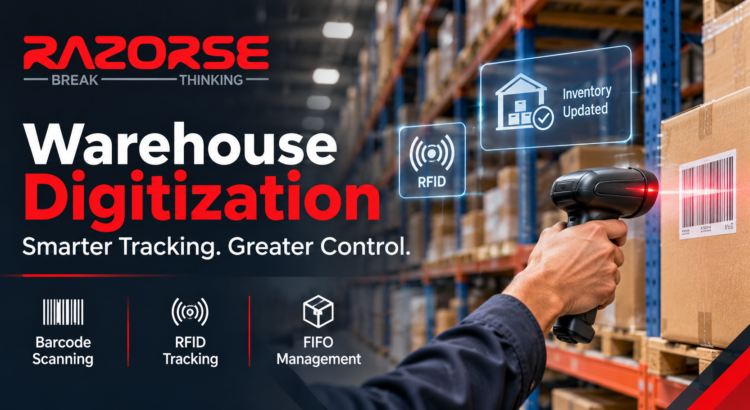
Warehouse Digitization: Barcode, RFID, FIFO Making Warehouses Smarter

Warehouses digitization play an important role in manufacturing, retail and supply chain operations. Every day, businesses receive, store, move and dispatch large amounts of materials and products. Managing all this manually can become difficult, especially when inventory levels change frequently.

Imagine spending valuable time searching for a product, checking stock records or trying to find out where a particular item was moved. These small challenges can slow down daily operations and lead to mistakes.

This is where Warehouse Digitization comes in.

Warehouse digitization uses modern technologies such as barcode scanning, RFID tracking and digital inventory management to make warehouse operations faster, more accurate and easier to manage. It helps businesses keep track of their stock, monitor material movement and improve overall efficiency.

Let’s understand how it works and why it matters.

What Is Warehouse Digitization?

Warehouse digitization means replacing traditional manual processes with digital systems and technologies.

Instead of depending only on paper registers, spreadsheets and manual stock updates, businesses use digital tools to record and monitor inventory information.

For example, when a product enters a warehouse, its details can be recorded using a barcode or RFID tag. When the product moves from one location to another, the system can update its movement records.

This makes it easier for warehouse teams to know:

  • What materials are available in stock.
  • Where each item is stored.
  • How much inventory has been received or dispatched.
  • Which products need replenishment.
  • Which stock should be used first.

In simple terms, warehouse digitization gives businesses better visibility and control over their inventory.

1. Barcode Scanning: Making Inventory Tracking Easier

Barcode scanning is one of the most common technologies used in modern warehouses.

A barcode contains information about a product or material. Using a barcode scanner, warehouse employees can quickly read this information and update the inventory system.

For example, when new materials arrive, employees can scan their barcodes instead of entering product details manually. The same process can be followed during storage, picking and dispatch.

How does barcode scanning help?

  • Reduces manual data entry.
  • Improves inventory accuracy.
  • Speeds up receiving and dispatch processes.
  • Makes product identification easier.
  • Helps maintain organised stock records.

By reducing repetitive manual work, barcode technology allows warehouse teams to focus more on their daily operations.

2. RFID Technology: Better Visibility of Stock Movement

RFID stands for Radio Frequency Identification. It uses radio waves to identify and track items through RFID tags and readers.

Unlike traditional barcode systems, RFID technology does not always require direct line-of-sight scanning. Depending on the system and setup, multiple tagged items can also be identified within a reader’s range.

For warehouses handling large volumes of materials, this can make inventory tracking more convenient.

Key benefits of RFID tracking include:

  • Faster identification of tagged items.
  • Better visibility of stock movement.
  • Improved material traceability.
  • Reduced dependence on manual scanning.
  • Easier monitoring of inventory across different locations.

For businesses looking to improve warehouse operations, RFID can be a useful step towards smarter inventory management.

3. Digital Stock Movement: Know Where Your Inventory Goes

Knowing how much stock is available is important, but knowing where it is moving is equally important.

In a warehouse, materials move through several stages, including receiving, inspection, storage, picking and dispatch.

When these movements are recorded manually, information can sometimes become outdated or difficult to track.

Digital stock movement systems help record these activities and maintain a better history of inventory transactions.

This allows businesses to understand where materials are stored, when they were moved and how much stock has been issued or received.

Better stock visibility also helps reduce unnecessary searching, misplaced inventory and delays in warehouse operations.

4. FIFO Management: Using Older Stock First

FIFO stands for First In, First Out. It is an inventory management method in which the materials received first are used or dispatched first.

For example, if a warehouse receives a batch of materials on Monday and another batch on Friday, the Monday batch should generally be used first.

This approach is particularly useful for products with expiry dates, limited shelf life or materials that may lose quality over time.

Digital FIFO management helps warehouse teams identify older stock and follow the correct usage sequence.

Why is FIFO important?

  • Reduces the chances of stock ageing.
  • Helps minimise material wastage.
  • Supports better inventory rotation.
  • Improves stock management.
  • Helps maintain product quality.

When FIFO is combined with digital inventory tracking, businesses can manage stock rotation more effectively.

5. Why Should Businesses Invest in Warehouse Digitization?

Warehouse digitization is not just about adopting new technology. It is about making everyday operations simpler and more organised.

Here are some important benefits:

Improved Inventory Accuracy: Digital records help reduce errors caused by manual stock entries and repeated data handling.

Faster Warehouse Operations: Barcode and RFID systems can make product identification and inventory updates quicker.

Better Traceability: Businesses can maintain clearer records of material movement, making it easier to track inventory.

Reduced Manual Work: Automated data capture reduces repetitive tasks and allows employees to focus on other important activities.

Better Decision-Making: Updated inventory information helps managers plan stock requirements, replenishment and dispatch more effectively.

Together, these improvements can support better warehouse performance and more efficient supply chain operations.

How Razorse Supports Smarter Warehouse Operations

As businesses move towards digital transformation, having better control over warehouse activities is becoming increasingly important.

Razorse believes that smarter operations begin with better visibility, accurate information and connected processes.

Warehouse digitization brings together technologies such as barcode scanning, RFID tracking, digital inventory management and FIFO practices to help businesses improve the way they manage stock and material movement.

The goal is simple: reduce unnecessary manual effort, improve inventory visibility and make warehouse operations more efficient.

Conclusion

A warehouse is more than just a place to store materials. It is an important part of the entire supply chain.

When inventory records are inaccurate or stock movement is difficult to track, it can affect business operations at multiple levels.

Warehouse digitization helps businesses move from manual tracking to smarter, more organised inventory management.

With technologies like barcode scanning, RFID and digital FIFO management, businesses can build better visibility, improve traceability and manage their warehouse operations with greater confidence.

The future of warehousing is not just about storing more stock. It is about managing it smarter.

Ready to rethink your warehouse operations?

Explore smarter digital solutions with Razorse.

Website: www.razorse.com
Email: info@razorse.com
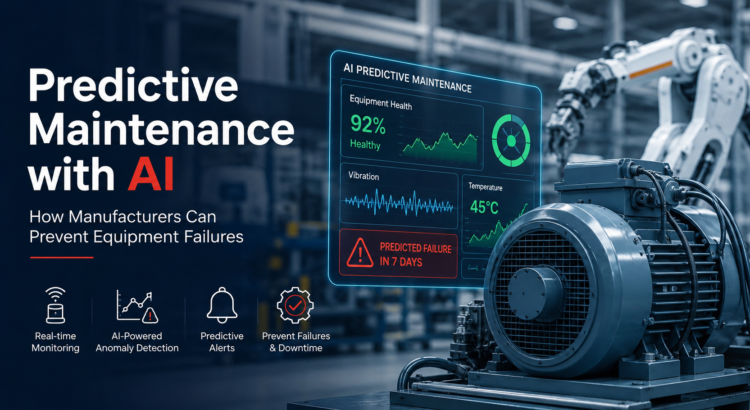
AI Predictive Maintenance Dashboard

AI Predictive Maintenance: Prevent Equipment Failures

Predictive Maintenance with AI: How Manufacturers Can Prevent Equipment Failures

Manufacturing downtime is expensive. A sudden machine breakdown can disrupt production schedules, increase maintenance costs, delay deliveries, and impact overall operational efficiency. Traditional maintenance approaches such as reactive maintenance and fixed maintenance schedules are no longer enough for modern factories.

This is where AI-powered predictive maintenance is changing the way manufacturers manage equipment.

By combining Artificial Intelligence (AI), Industrial IoT (IIoT), machine learning, and real-time equipment monitoring, manufacturers can identify potential failures before they occur and take corrective action at the right time.


What Is Predictive Maintenance?

Predictive maintenance is a data-driven maintenance strategy that uses equipment data to predict when a machine or component is likely to fail.

Instead of waiting for equipment to break down or servicing machines at predetermined intervals, predictive maintenance continuously monitors machine health and identifies unusual patterns that may indicate an upcoming failure.

AI makes this process more powerful by analyzing large volumes of data from machines, sensors, production systems, and historical maintenance records.

For example, an AI system can detect changes in temperature, vibration, pressure, energy consumption, or operating speed and determine whether these changes indicate normal operation or a potential equipment problem.


How Does AI-Powered Predictive Maintenance Work?

An AI-based predictive maintenance system typically works through four key stages:

1. Real-Time Data Collection

Industrial machines generate huge amounts of operational data. Sensors can monitor parameters such as:

  • Temperature
  • Vibration
  • Pressure
  • Motor speed
  • Energy consumption
  • Noise levels
  • Machine operating hours

Using Industrial IoT (IIoT) technologies, this data can be collected continuously from connected equipment.

2. AI and Machine Learning Analysis

The collected data is analyzed using AI and machine learning algorithms.

These algorithms learn from historical machine behavior and maintenance records to identify patterns associated with equipment degradation or failure.

Instead of simply detecting a threshold violation, AI can identify more complex patterns that may not be obvious through manual monitoring.

3. Anomaly Detection

AI-powered systems can identify abnormal machine behavior in real time.

For example, a machine may still be operating within its normal temperature range, but a combination of increasing vibration, rising energy consumption, and changing operating speed could indicate a developing problem.

AI can recognize these patterns and generate an early warning.

4. Predictive Alerts and Maintenance Action

Once the system identifies a potential failure, maintenance teams can receive alerts and insights through an AI dashboard.

This allows engineers to inspect the equipment, schedule maintenance, and replace components before a major breakdown occurs.

The result is a shift from reactive maintenance to proactive, data-driven maintenance.


Key Benefits of Predictive Maintenance in Manufacturing

Reduced Unplanned Downtime

Unexpected equipment failures can bring production lines to a halt. Predictive maintenance helps manufacturers identify potential problems early, reducing the risk of sudden breakdowns and production interruptions.

Lower Maintenance Costs

Traditional preventive maintenance may involve replacing components even when they are still functioning properly. AI-based predictive maintenance enables organizations to perform maintenance based on actual equipment condition, helping optimize maintenance spending.

Improved Equipment Lifespan

Continuous monitoring allows manufacturers to identify abnormal operating conditions before they cause serious damage. Addressing these issues early can help extend the useful life of industrial equipment.

Higher Production Efficiency

Healthy machines operate more consistently. By minimizing unexpected breakdowns and optimizing maintenance schedules, predictive maintenance can contribute to better production efficiency and overall equipment effectiveness.

Better Maintenance Planning

AI-generated insights allow maintenance teams to prioritize equipment that requires attention. Instead of responding to emergencies, teams can plan maintenance activities around production schedules.


AI Predictive Maintenance vs Traditional Maintenance

Traditional maintenance strategies generally fall into two categories: reactive maintenance, where equipment is repaired after failure, and preventive maintenance, where equipment is serviced according to a fixed schedule.

Predictive maintenance takes a different approach.

It uses real-time machine data, historical information, AI analytics, and machine learning to determine when maintenance may actually be required.

This makes maintenance more condition-based and data-driven.


The Role of AI Dashboards in Predictive Maintenance

An AI-powered maintenance dashboard can bring equipment health data into a single interface.

Maintenance managers can monitor machine conditions, identify anomalies, view predictive alerts, analyze historical trends, and prioritize maintenance activities.

This provides decision-makers with a clearer view of factory operations and helps transform complex machine data into actionable insights.


The Future of Predictive Maintenance

As manufacturing becomes increasingly connected, predictive maintenance is expected to become an important component of Industry 4.0 and smart manufacturing.

The combination of AI, IIoT, edge computing, computer vision, and advanced analytics can enable factories to move toward increasingly autonomous equipment monitoring and maintenance.

The future is not simply about detecting when a machine is likely to fail. It is about understanding why the failure may happen, what action should be taken, and how production can be optimized around it.


Conclusion

AI-powered predictive maintenance is helping manufacturers move from reactive equipment management to intelligent, proactive operations.

By continuously analyzing machine data, detecting anomalies, predicting potential failures, and providing actionable insights, AI can help organizations reduce downtime, optimize maintenance costs, improve equipment reliability, and increase operational efficiency.

For manufacturers looking to build smarter and more resilient operations, predictive maintenance is no longer just a future concept—it is becoming a key part of the Industry 4.0 transformation.


Ready to Make Your Manufacturing Operations Smarter?

Razorse helps businesses explore AI, Industrial IoT, automation, and Industry 4.0 solutions designed to improve operational visibility and efficiency.

Connect with Razorse to explore how AI-powered predictive maintenance can transform your manufacturing operations.

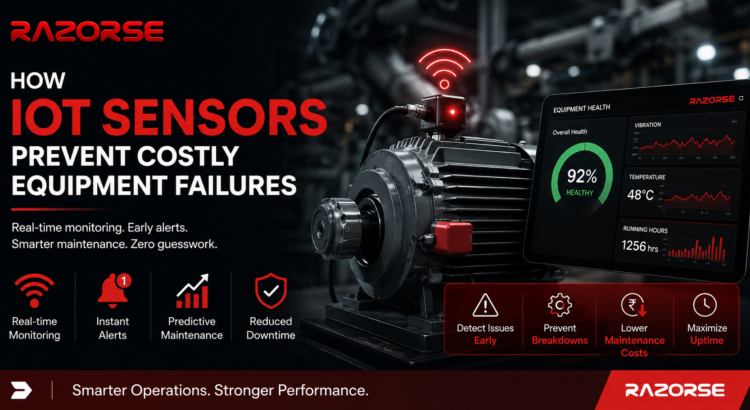
Industrial IoT sensors for predictive maintenance, real-time machine monitoring, and equipment failure prevention in smart manufacturing

How IoT Sensors Prevent Costly Equipment Failures

A Simple Guide to Smarter Manufacturing

Imagine this.

Your production line is running smoothly, orders are on track, and everything seems fine.

Then suddenly…

A critical machine stops working.

Production comes to a halt.

Deadlines are missed.

Customers are affected.

And the repair bill? Much higher than expected.

The worst part is that most machine failures don’t happen without warning. They usually show small signs before breaking down. The problem is that these signs often go unnoticed.

This is where Industrial IoT (IIoT) sensors make all the difference.


What Are IoT Sensors?

IoT (Internet of Things) sensors are smart devices installed on machines and equipment. They continuously collect real-time data such as:

  • Temperature
  • Vibration
  • Pressure
  • Speed
  • Humidity
  • Energy consumption

Instead of waiting for a machine to fail, these sensors monitor its health every second and send updates to a centralized dashboard.

Think of them as a fitness tracker for your machines. Just like a smartwatch alerts you when your heart rate is unusually high, IoT sensors alert your maintenance team when a machine starts behaving differently.


Why Equipment Failures Are So Expensive

A machine breakdown doesn’t just mean repair costs.

It can lead to:

  • Production delays
  • Unplanned downtime
  • Higher maintenance expenses
  • Missed customer deadlines
  • Reduced product quality
  • Lower productivity

For manufacturers, even a few hours of downtime can result in significant financial losses.

That’s why preventing failures is always more cost-effective than fixing them.


How IoT Sensors Help Prevent Equipment Failures

1. Early Warning Before Problems Get Bigger

Machines rarely fail overnight.

A motor may begin vibrating more than usual.

A bearing may start heating up.

Power consumption may slowly increase.

These changes might not be visible during regular inspections, but IoT sensors detect them instantly and notify the maintenance team.

This gives businesses enough time to fix the issue before it turns into a costly breakdown.


2. Real-Time Monitoring

Instead of checking machines only during scheduled maintenance, IoT sensors monitor equipment 24/7.

Managers can view the health of every connected machine through a single dashboard.

This real-time visibility helps teams make faster and smarter maintenance decisions.


3. Predictive Maintenance

Traditional maintenance usually follows one of two approaches:

  • Repair the machine after it breaks.
  • Service it at fixed intervals.

Both approaches have limitations.

With IoT sensors, businesses can move to predictive maintenance.

By analysing sensor data over time, companies can identify patterns that indicate when a component is likely to fail.

This means maintenance is performed only when needed—reducing unnecessary servicing while preventing unexpected failures.


4. Better Resource Planning

When maintenance teams know which machine requires attention and when, they can:

  • Schedule repairs in advance
  • Order spare parts on time
  • Reduce emergency maintenance
  • Minimise production disruptions

This improves operational efficiency across the entire facility.


5. Longer Equipment Life

Machines that are monitored regularly experience fewer major failures.

Small issues are resolved before they damage critical components, helping businesses extend the life of expensive equipment and maximise their return on investment.


Industries That Benefit from IoT Sensors

Industrial IoT sensors are useful across many sectors, including:

  • Manufacturing
  • Automotive
  • Food Processing
  • Pharmaceuticals
  • Warehousing
  • Logistics
  • Energy
  • Heavy Engineering

Any business that depends on machinery can benefit from real-time equipment monitoring.


Why More Businesses Are Choosing Industrial IoT

Modern manufacturing is becoming increasingly data-driven.

Instead of relying on assumptions, businesses now use real-time information to improve performance, reduce downtime, and make informed decisions.

Industrial IoT is no longer just a technology trend—it has become a practical business solution for companies looking to improve efficiency and stay competitive.


The Future Is Proactive, Not Reactive

Waiting for a machine to fail is an expensive strategy.

With Industrial IoT sensors, businesses can detect potential issues early, reduce unplanned downtime, and keep operations running smoothly.

The goal isn’t just to collect data.

It’s to turn that data into timely action.

Companies that embrace smart monitoring today are better prepared for the challenges of tomorrow.

At Razorse, we help businesses leverage Industrial IoT, AI, and Industry 4.0 solutions to build smarter, more connected operations. By combining real-time monitoring with intelligent analytics, organizations can improve productivity, reduce maintenance costs, and make confident, data-driven decisions.