24/7 Support : info@razorse.com | WhatsApp : +91-7011221090

Why companies should be sustainable and how IT can help

A movement to go-green is increasing grip, and business & IT leaders must ensure that they do not miss out. Companies should care about ecological sustainability for several reasons- consumer demand, investor pressure and legislative, talent retention as well as to guarantee the globe can support life. That means that IT and business leaders must ensure they are achieving their part.

Pressure is increasing for the corporate sector to address its ecological footprint & become more sustainable. Here is a look at the key drivers and how IT can help. Following are some reasons companies must be sustainable and methods they require their IT sectors to help.

1. Employee demand – In a time where extensive talent shortages are reality, businesses that display concern for social, environmental and governance issues can better fascinate and retain the employees.

2. Consumer demand – Companies must care about the atmosphere if they wish to keep & win consumers, as more customers are inspecting their purchasing behavior with the lens of the climate action. Customers all over the planet are progressively using environmental sustainability to decide their buying decisions. Consumers gradually see themselves as the agents of weather action and believe for-profit companies are agents of weather action also. This amplifies the call for IT and business leaders to care about sustainability.

3. Investor demand – Investors are amongst the shareholders most vigorously demanding that businesses care about the atmosphere. Investor focus on weather issues has only augmented since COVID-19, plus with all other factors prompting boosted focus on conservational issues, it is only anticipated to grow.

4. Governmental pressure – From the punitive like taxes on plastic to the motivating like clean energy incentives in Inflation Reduction Act, legislation to spur weather action is rising. Governments are nowadays far more in line with focusing on ecological crises.

5. To keep the earth livable

Advantages of caring about sustainability

Companies can advance many benefits from concentrating on sustainability & other ESG (Environmental, social & Governance) issues. Concentrating on sustainability gives several benefits, comprising the following:

  • Focusing on weather action entices investors.
  • Consumers feel great about purchasing from the company, plus new consumers are fascinated to the company.
  • A concentration on sustainability fascinates new workers, and existing staff feel great about working for the corporation.
  • Focusing on weather issues will aid offer a convenient planet for children growing up today.

While the challenges in attaining sustainability are significant, these challenges also show significant opportunity.

How to run an effective loyalty program

One of the biggest worries to hear from merchants is limited time. If you are worried that you won’t have much time to accomplish an effectual loyalty program, following are some tips to balance the minutes you spend with getting the best out of a loyalty program.

1. Set-up automated emails – One of the greatest things a loyalty program does, is to assist you be linked to your customers amid purchases. Though, unlike many marketing campaigns, loyalty emails can perhaps look after themselves. Emails such as welcome sequences, reward available reminders and points balance updates normally have far higher open & click through rates rather than other marketing emails, since they are more individual and personalized. They can even be fully automated so that you can fix them up, and then let them run in the background till you have little more time to tweak them.

2. Make clienteles part of your marketing crew – If you make your customers a bigger part of your marketing, they might do some acquisition work for you. By encouraging customers to give reviews and refer family and friends, you can push more authorized traffic to your website that is more possibly to convert. Referred clients normally have a higher lifetime value also.

3. Use the loyalty program to power your current marketing – One great way to manage your loyalty program is to work it in your other marketing plans. Rather than an individual activity, it could be used to add weight and power to things you are already investing time & effort into.

4. Classify the metrics that matter – Choose the metrics that are most important to your loyalty tactic today. Early on, that could be the no. of members you have, as well as how their standard order value compares to the non-members. This will aid you to understand if your plan is rising, as well as if adding intrinsic value. While you develop the program, you can adapt this to how many endangered clients you have, & how consumer lifetime value is growing. By concentrating on one or two system of measurement before trying to report on each and everything, you would be able to check the victory of your program rapidly and easily. You will even find it simpler to know when variations need to be executed.

UX Design – Best Practices for Ecommerce web portals

UX in an eCommerce Store – UX design for e-Commerce stores (web + mobile applications) is a gateway to get into your target spectator’s head. Make sure to offer them a spontaneous, simplistic, logical, and thrilled shopping experience. Be it eCommerce mobile application development or eCommerce web development, UI/UX design plays a significant role. UI emphases on getting users’ first attention with imaginative design. However, UX wins their hearts by offering them with smooth app experience they want.

Following are some eCommerce store factors’ to consider for UX:

1. User Interface – Although UX design plays a fundamental role in the accomplishment of any software, it is unfinished without User Interface (UI) design. Basically, UX adds final touchups as well as puts the soul in the UI design. The best eCommerce User Interface must have clear branding all over its landscape with publicity enablement’s. It will support your business partners for using your branding essentials to showcase their affiliation with your brand & vice-versa for you.

2. Clear Homepage Layout – Your E-Commerce platform’s homepage plan is the first imprint on the users. Its placements for deals and brands, search bar, contact info and profile define how real the user experience it will generate.

3. Useful Product Detail Pages – It might show several details, such as:

  1. Product images from diverse angles
  2. Product title
  3. Prices, discounts and limited-time deal with countdown offer
  4. Product color and size range segment
  5. Pin code for a delivery time estimate
  6. Product Descriptions about its style & main use, color, material details, etc.,
  7. Bank & Payment card offers
  8. Call to action: Add to Cart or Buy Now
  9. USPs of eCommerce platform, such as 7 days return/exchange plan, 100% authentic products, etc.
  10. Related product grids
  11. Ratings and reviews
  12. FAQs

4. Simple & direct checkout pages – Online Shops checkout procedure is same as checking out from the offline stores that provide home delivery. It asks for the info such as contact details, payment details and adding address, validating the cost with applied discounts and offers, then making the payment to ultimately place an order.

5. User Profiles – This is the home of a customer from where the customers can edit their personal information, like user name, category interests, user bio, wish list, premium points, payment information, etc. Some eCommerce websites also permit the users to make the profile public and be an influencer for their brand.

To improve the eCommerce UX for better conversions; take and implement clients’ feedback regularly, improve website speed, enhance navigational UI UX design, receptiveness in nature and ease in the checkout procedure.

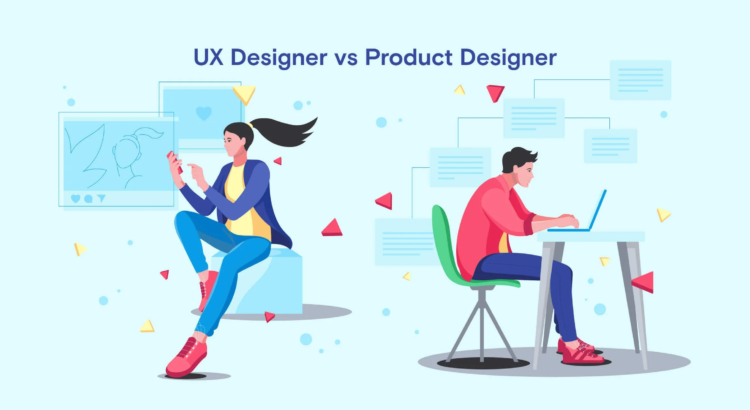
UX Design vs Product Design: The Detailed Comparison

User Experience or UX design helps to build the products that provide a significant experience to the users. The design procedure is to design the whole technique of getting & combining the product which covers several attributes of design, function, branding and usability.

Product design is a collective method of making a product from the beginning to end. The process comprises everything from managing the market study, identifying issues, creating the product, getting comprehensive solutions, as well as other related activities.

Product designers attempt to solve real-world problems and create easy-to-use products. Their main responsibility is to consider several vital product features, which causes an effective design & marketing.

Difference between Product Design & UX Design-

The major difference among these two design job responsibilities is in their features. Product designer is more calculated, while a UX designer is way more strategic. Following are the main points as to how they differ in every aspect:

1. Designing Methods – The primary duty of a UX designer is to define how a product feels. They create interaction designs & write product usage circumstances. They make a prototype for user interface. Besides, they record the activities of the user through numerous testing tactics such as email surveys & A/B testing.

Whereas, product designers normally make the feel & look of the whole product. They provide data about functions of some particular parts of a product. Also, they discover a market scope as well as make plans for applying solution to the problems.

2. Targets & Responsibilities – Responsibilities and attention also decide how the product designer varies from the UX designer. A product designer mainly focuses on business requirements more than a UX designer who is primarily concerned with user necessities.

3. Skill Set Needed – The skillset is the most important difference among product design & UX design. Though the basic things would be alike, the specifications are diverse. Product designer must be good at analytical and logical thinking. A strategic attitude is mandatory for a product designer, since they work with planning & designing. UX designers should be efficient in studying & assembling data. Normally, they use UX copy; thus, they must also have decent writing knowledge.

4. Tools Required – Product designers work with sketch & mind mapping tools, while UX designers use wireframe and interactive design tools.

5. Qualifications needed for the Designers – There is no major difference among the qualifications of the product designers & UX designers. They are almost the same in this matter-

  • Professional experience in the required segment.
  • Degree with a suitable specialization.
  • Detailed knowledge of the design methods (preparation, instructing & application)

The essential qualifications may differ from company to company; but the stated qualifications are important.

How brands can encourage customers to shop again and again

What is a brand loyalty program, and how does it work?

Brand loyalty or customer loyalty program is a marketing tactic used broadly by the retailers and other businesses to identify and reward the customers who repeatedly involve and purchase with a brand. Companies use several marketing strategies such as rewards, discounts, offers, coupons, merchandise, early access to new products, as well as other special incentives to keep existing customers and entice new ones.

Loyalty programs are planned to encourage repeat purchases with a brand. A well-made and executed loyalty program can turn a client into a more regular one who might also become a brand promoter.

Loyalty programs aims at:

  • Attracting & retaining customers
  • Rewarding customers (with discounts, coupons, and other special incentives) for repeat business
  • Improving customer experience with the product
  • Increasing the overall sales & profits

Ways businesses can keep their customers coming back:

By improving customer engagement rates, companies can easily make loyal customers. Customer loyalty supports to build an emotional connection among the customer & the brand. Growing customer engagement is the most effective way to form a long-term customer relationship. Following are some tips to know what is customer loyalty program software and how a brand can encourage customer engagement-

  1. Offer more than just a discount: Although clients love to get discounts, they yet want more from the association. Brands can propose experiential rewards to generate an emotional bond that goes beyond transactional rewards. Experiential rewards offer members with access to exclusive experiences to the brand and cannot be replicated. These types of perks encourage the customers to keep coming back to same brand.
  2. Apply gamification method: Many brands apply gamification methods to drive engagement, which is key to better purchases & loyalty. With gamification, clients earn rewards by performing particular actions such as taking a quiz, rotating a prize wheel, or reaching a specific membership level in the rewards program. Few of the most common gamification techniques brands use in their loyalty programs comprise redeemable points, performance graphs, badges, leader boards, etc. All such techniques assist businesses to keep their clients encouraged to remain involved with their brand.
  3. Digital Loyalty Program: In current digitally-driven world, companies must provide a loyalty program that runs automatically in a mobile app. This is a new way to drive better engagement with the brand. Mobile loyalty programs permit customers to gather points with both online and brick-and-mortar stores within an app. As everything is managed within the app, businesses can swiftly review the client data to improve their business. Furthermore, the customer has achance to add points & redeem personalized, location-based rewards rapidly. This drives engagement and improves loyalty.

Loyalty programs are certainly the best and most real ways to keep existing customers, appeal new ones, and make higher profits. Though, it is important to set a brand loyalty program wisely or qr code loyalty program, keeping the target clienteles in mind to leverage its gains to the fullest.

How Does An ERP Software Deliver An ROI (Return On Investment) For Your Business?

If there is one system that a lot of companies implement today is the ERP. Enterprise Resource Planning is a system which automates core business functions like inventory & order management, accounting, customer relationship management, human resources, manufacturing and others. These functions are integrated into one system thatincreases the company’s effectiveness and productivity significantly.

How ERP implementation is helping businessesto grow:

Investing in operational ERP has been a priority of businesses ever since. With the massive number of companies counting on an ERP, it is certainly a system worth investing in.

1. Cost-Efficiency – By integrating the essential functions of an industry into a one, enterprise-wide system, an industry is able to simplify its disordered processes, thus saving a lot of money. It eliminates the requirement for an independent system for every department, therefore the amount of cost & time associated with training more users for different systems is also eluded.

2. Efficient Data Sharing – It permits its users to upload, edit, as well as share critical data with other key persons in the corporation. This seamless data sharing abilityincreases the quality not just of the deliverable,however the communication between the employees too. A more distinct work collaboration in the business makes every output more accurate and on-point.

3. Improved Productivity – Using an obsolete resource planning module to run a business is not only costly but also damages the productivity level of your staff. With ERP Software, your staff will not just experience a more well-organized system, their outlook towards the task will also change, growing their productivity level in the procedure.

4. Agile Decision Making – Many successful business nowadays knows that ERP software is an important tool not only to expand operational productivity but also as a main resource when making important business decisions. A lot of current ERP software today letsyou access even the most significantdata in real-time through cloud technology. Cloud-enabled ERP systems are not just more cost-effective, but also allows small companies to track their key metrics & analytics real-time.

5. Greater Supply Chain Visibility – ERP software can aidhugely with supply chain management to large as well as small businesses that have to deal with shipping. It will give businesses better understanding into their supply chain processesso that owners can make informed decisions so as to stay ahead of their contenders. Issues rising in the supply chain can be swiftly notified and stopped with the help of the system.

6. Happier Customers – Customer fulfilment is a major fuel to keep any corporate running, the best way to do that is by giving standard services involved towards them. ERP implementation in your industry can help you guarantee customer satisfaction in numerous ways.

We provide the best ERP software at Razorse Software. Our team of professionals would help you select the right ERP system for your company & analyze the ROI it is going to get you when the project goes live.

Other than ERP based custom enterprise software development, our custom loyalty program software also help you to improve the RoI.